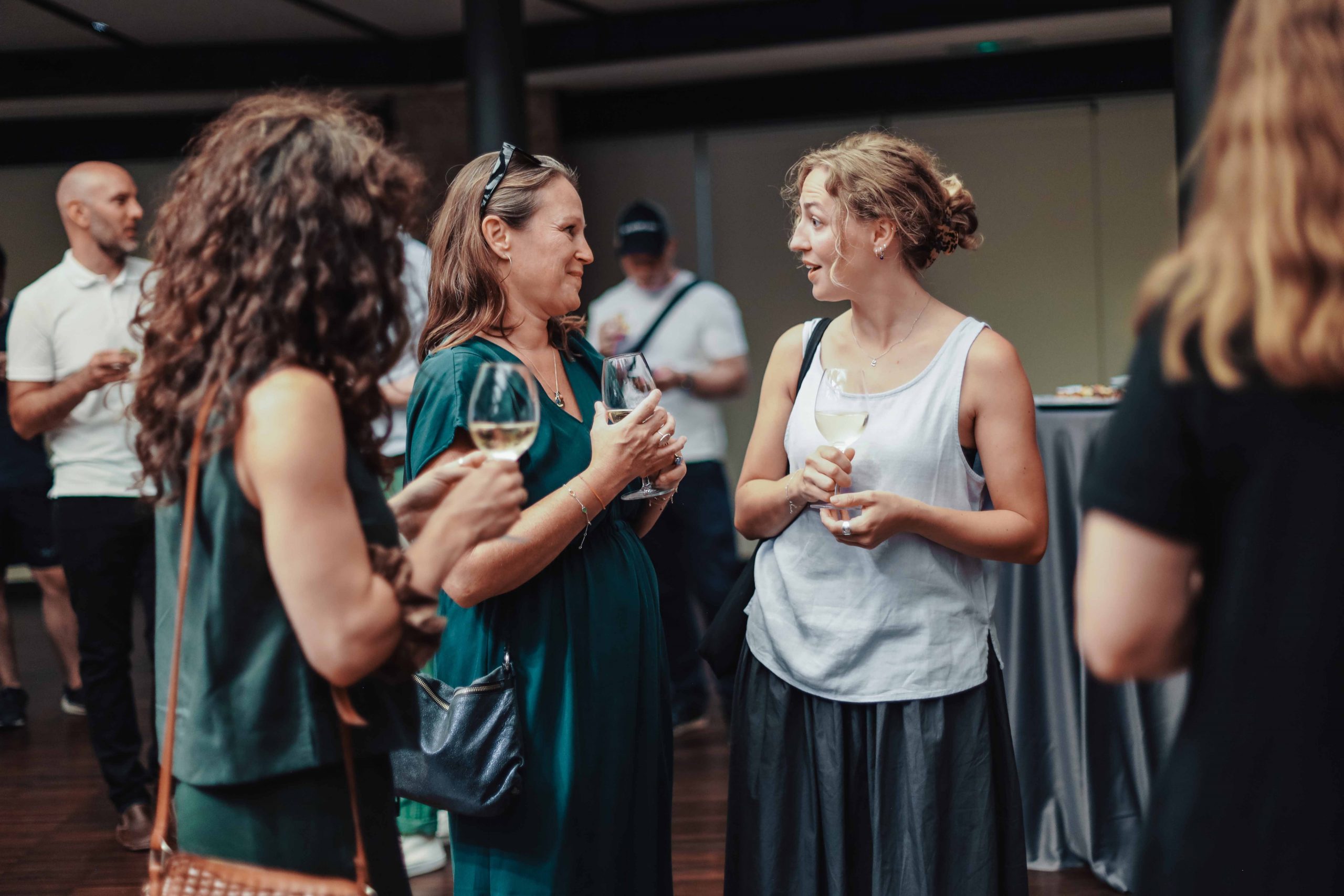
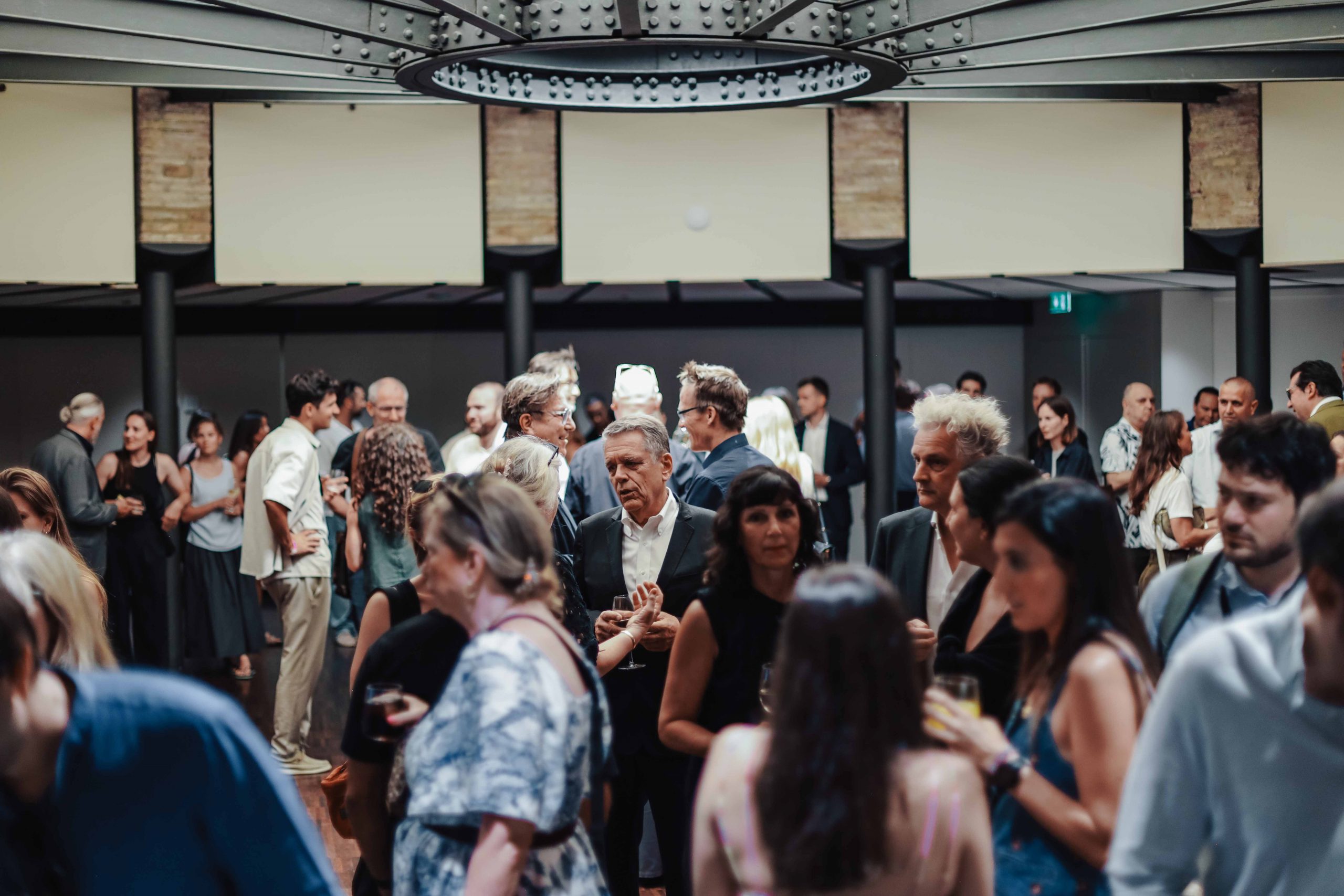
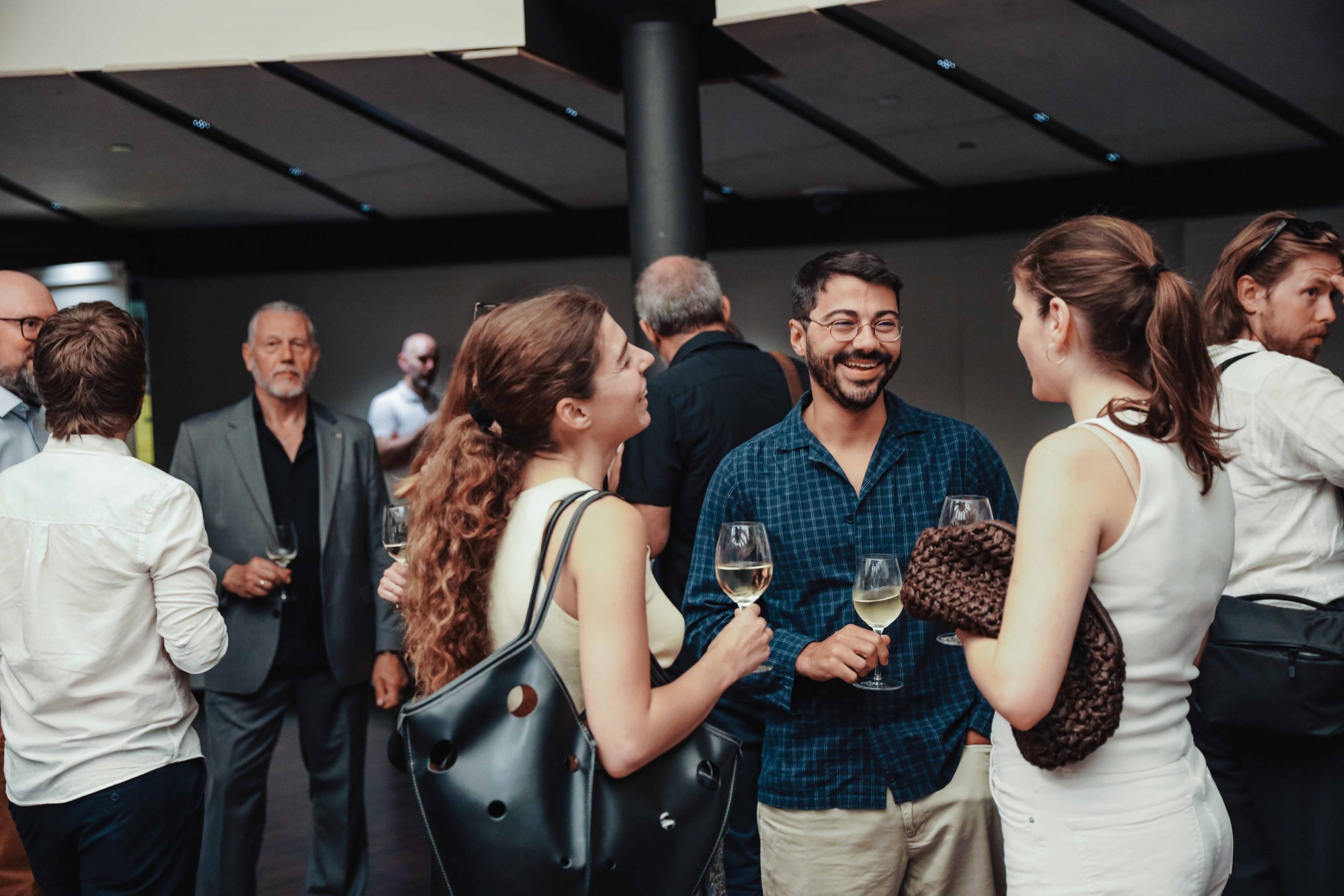
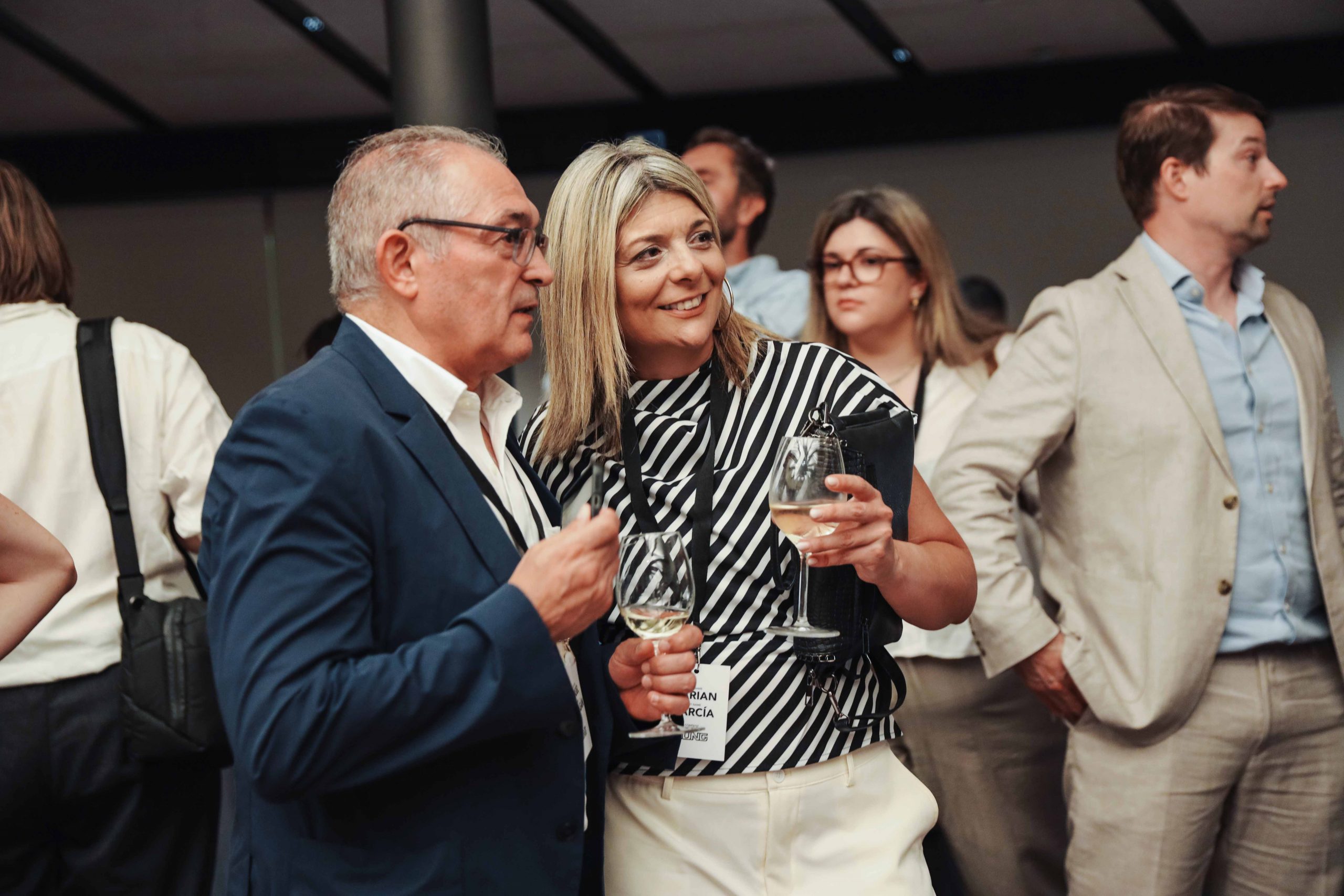
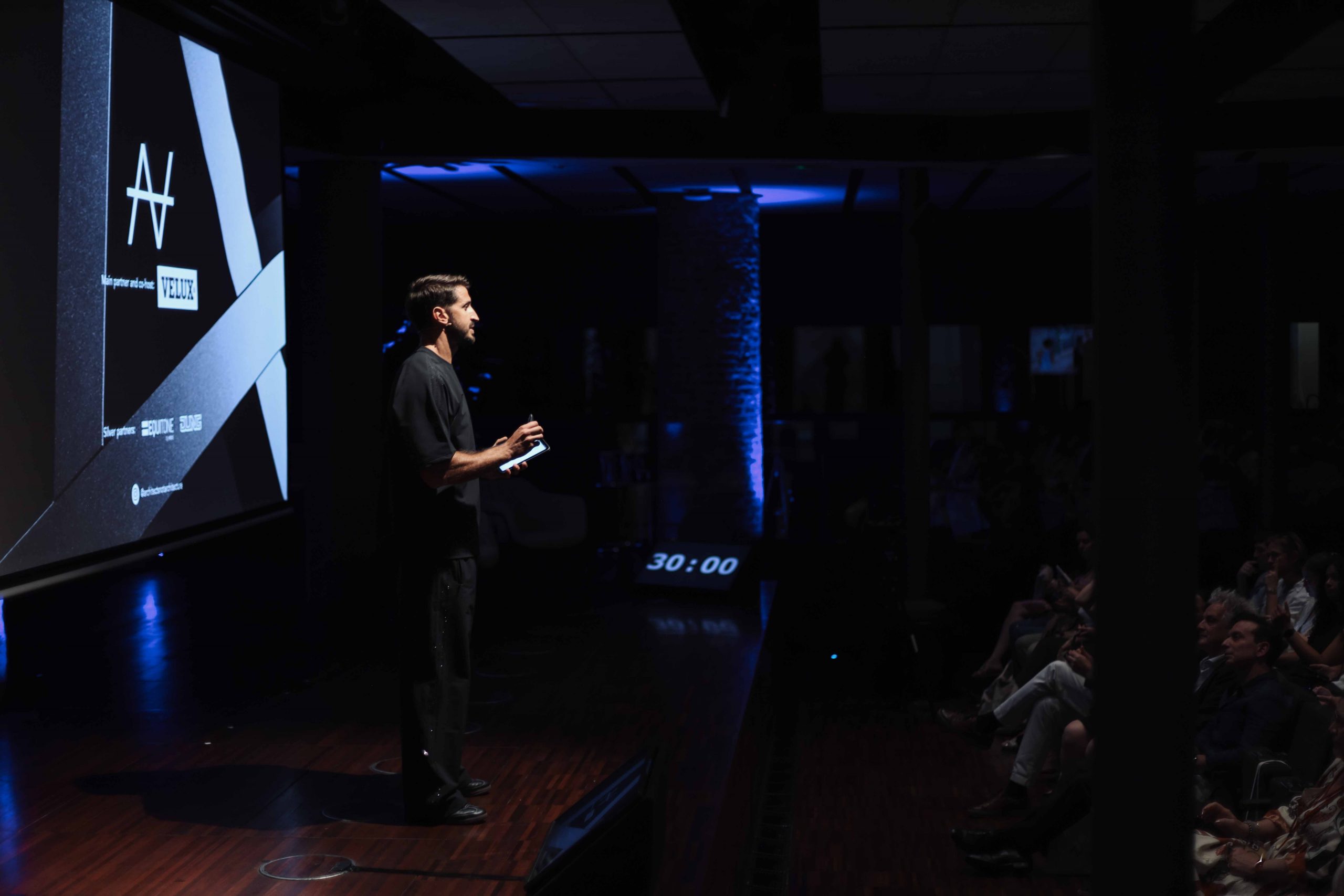
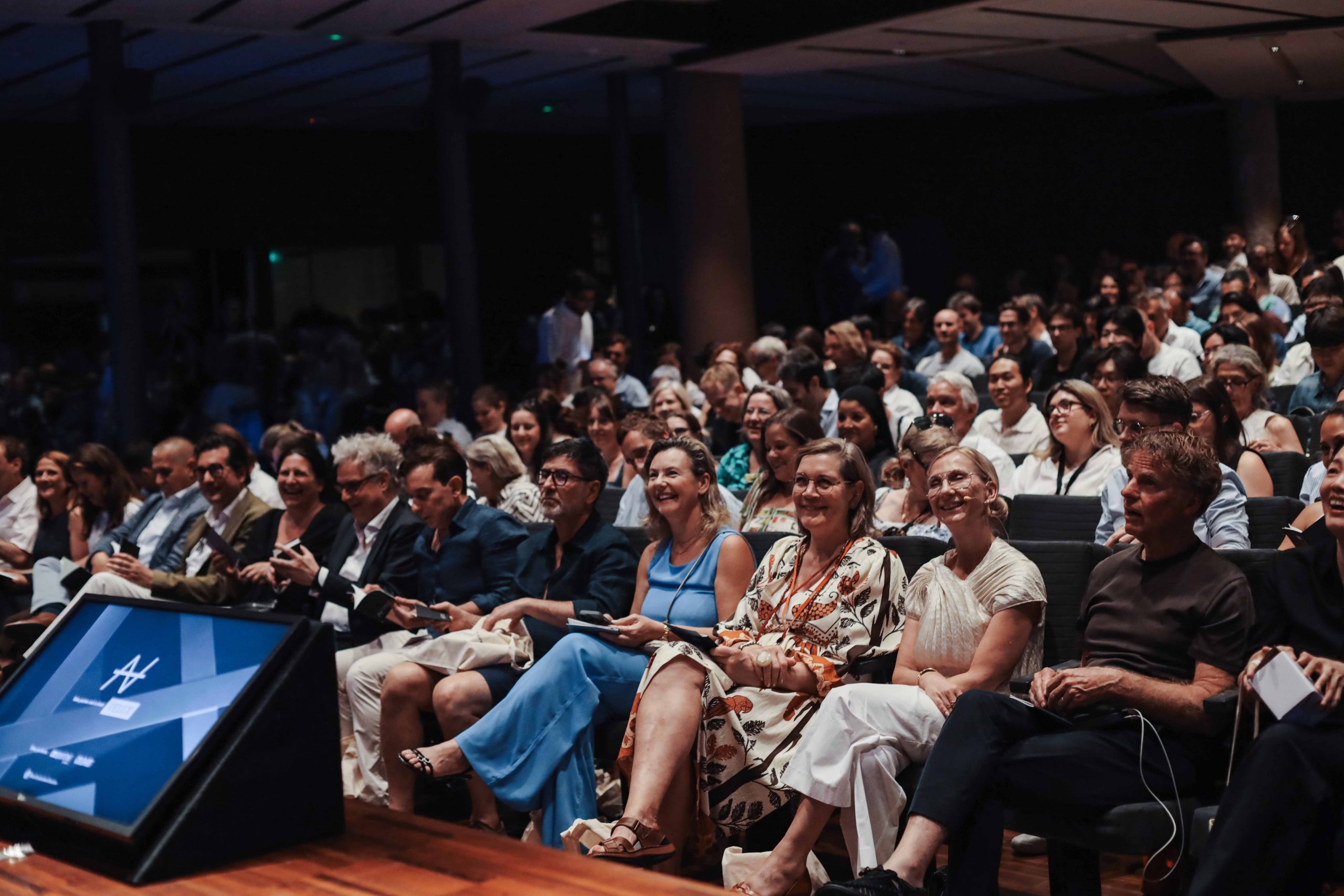
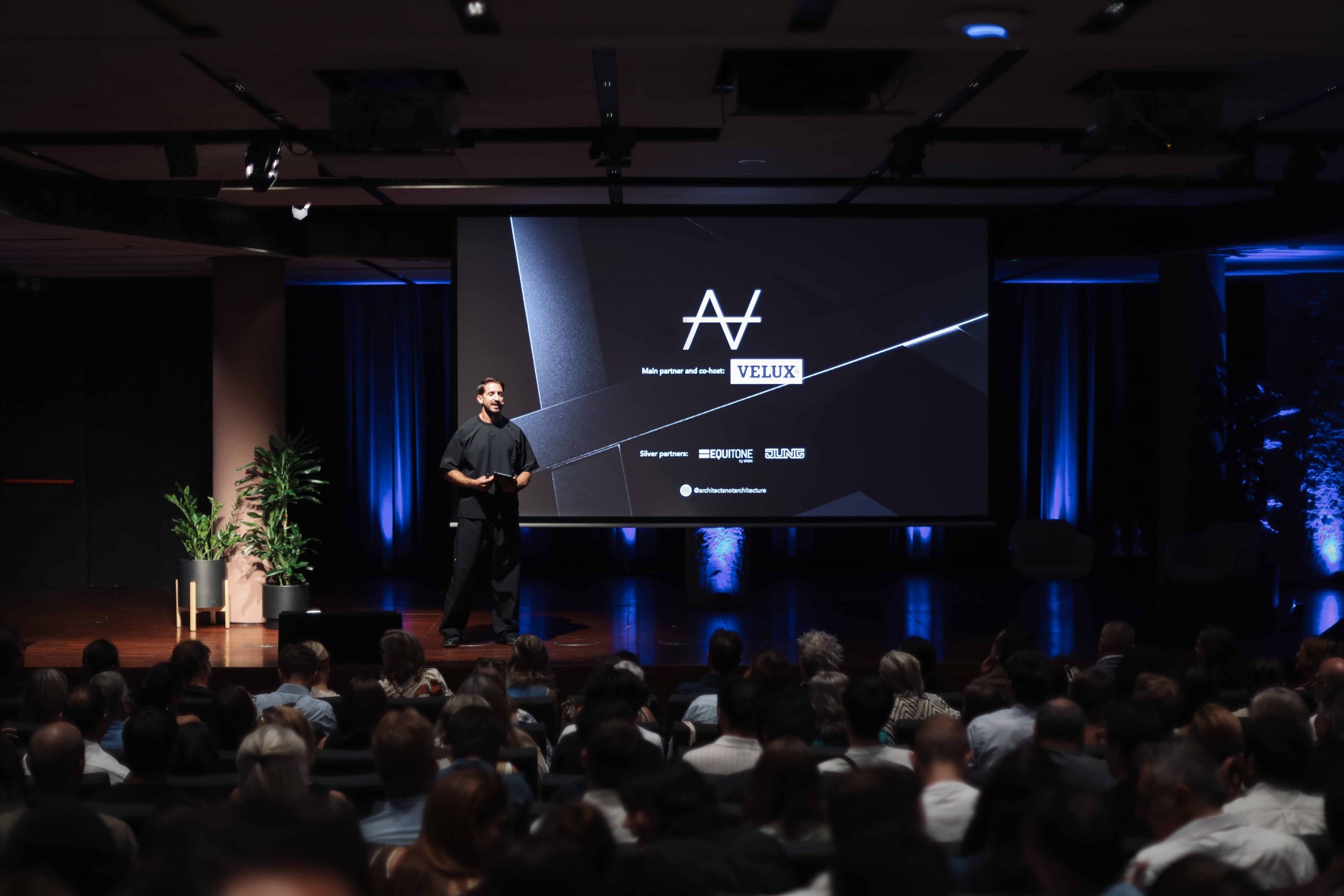
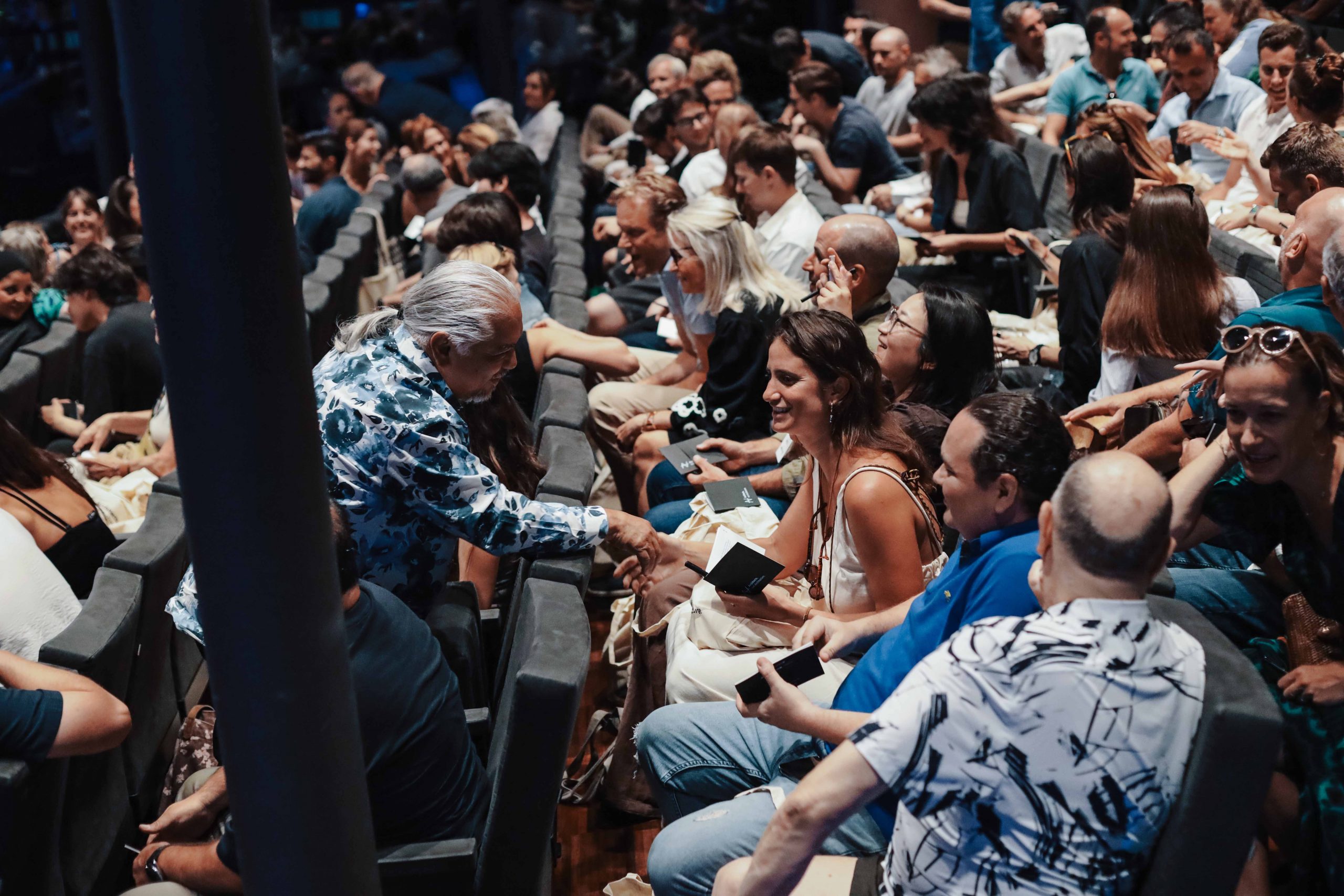
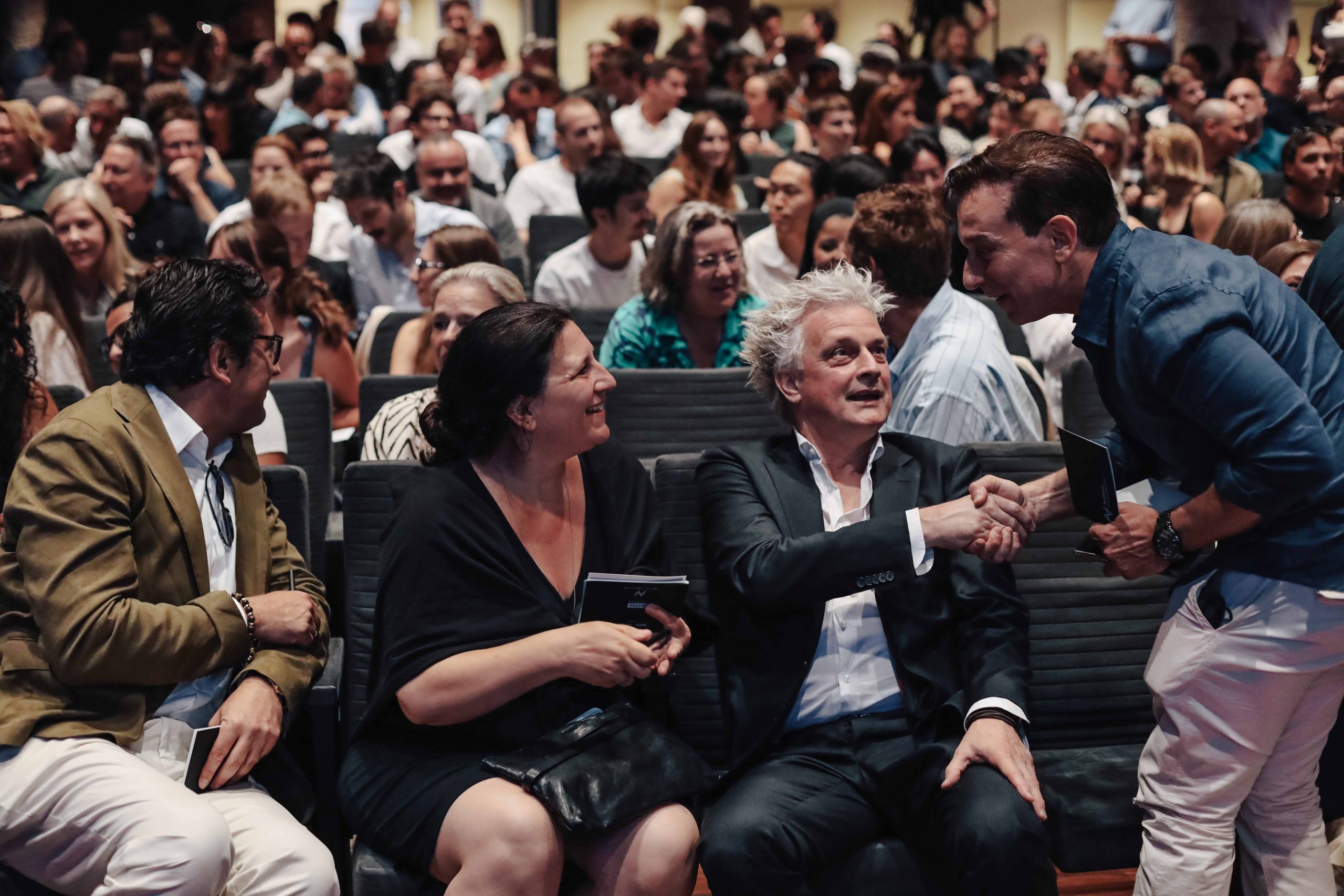
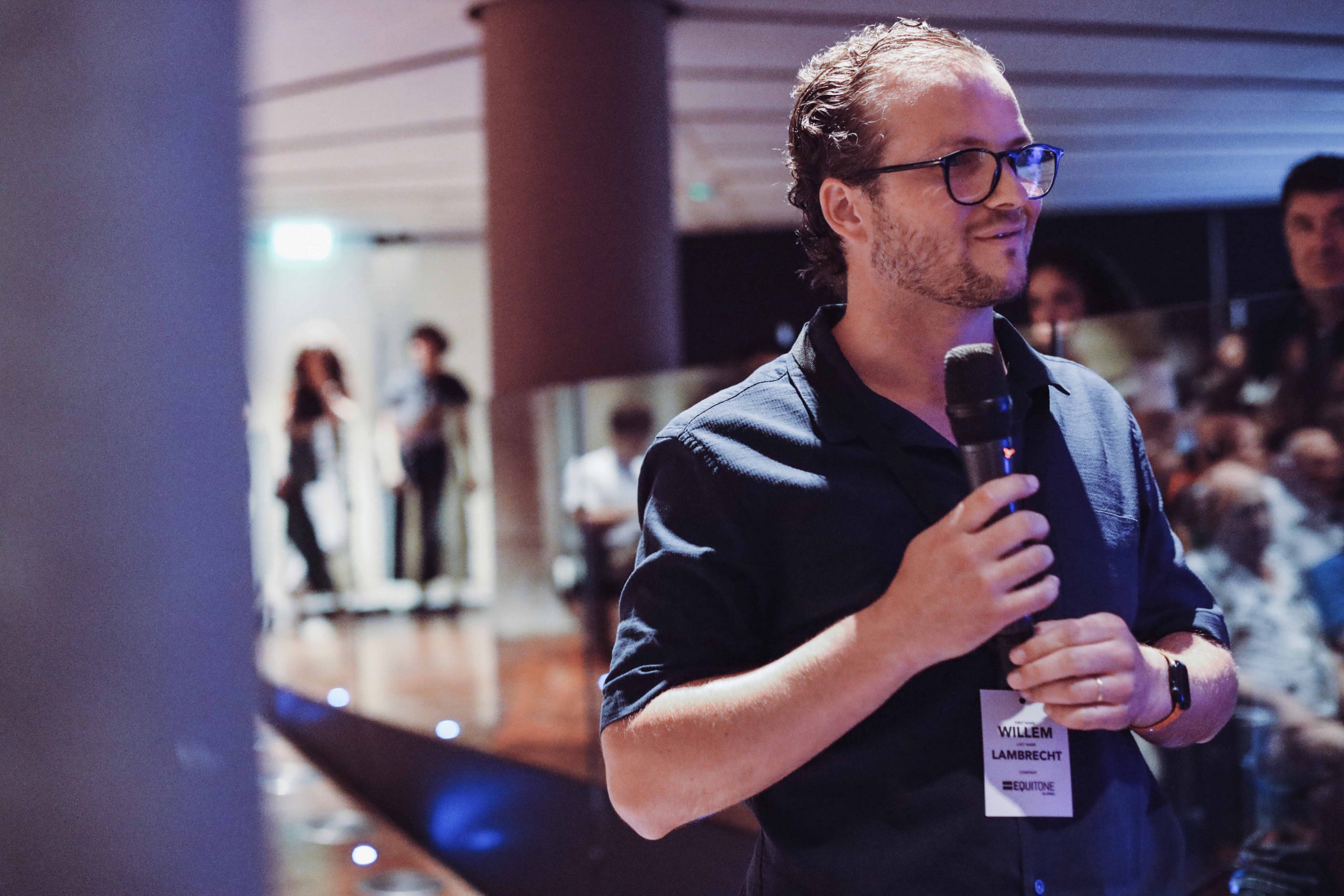
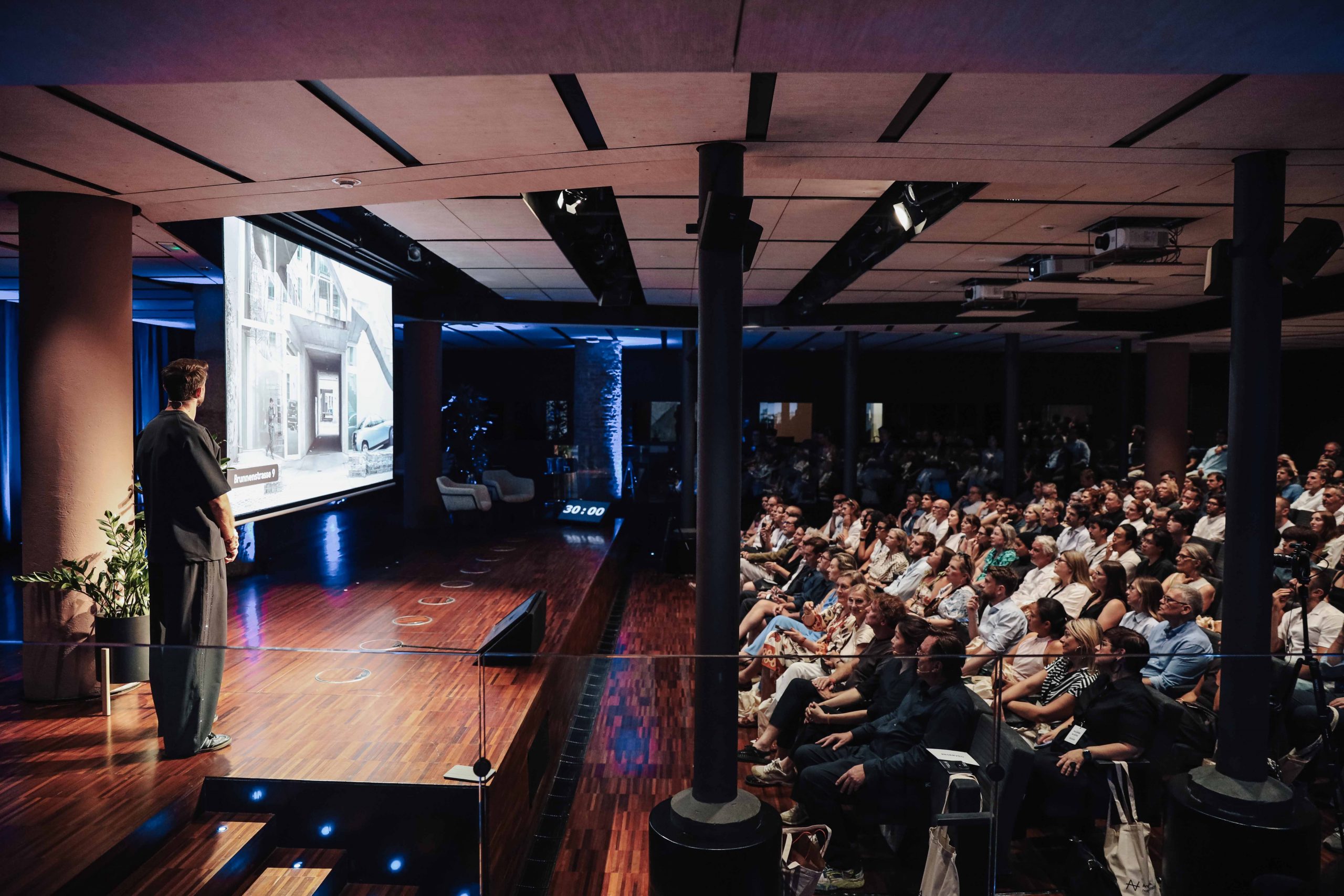
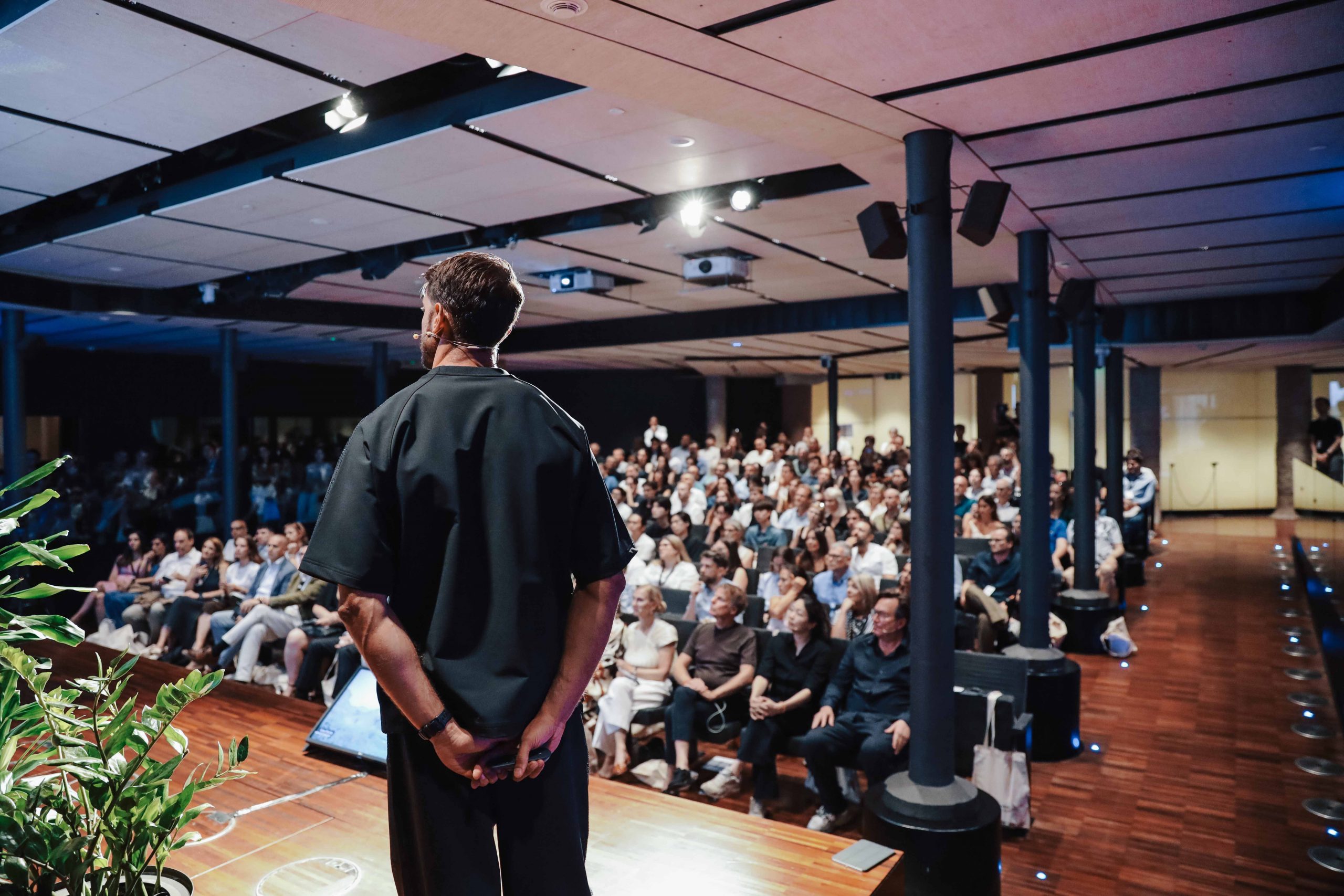
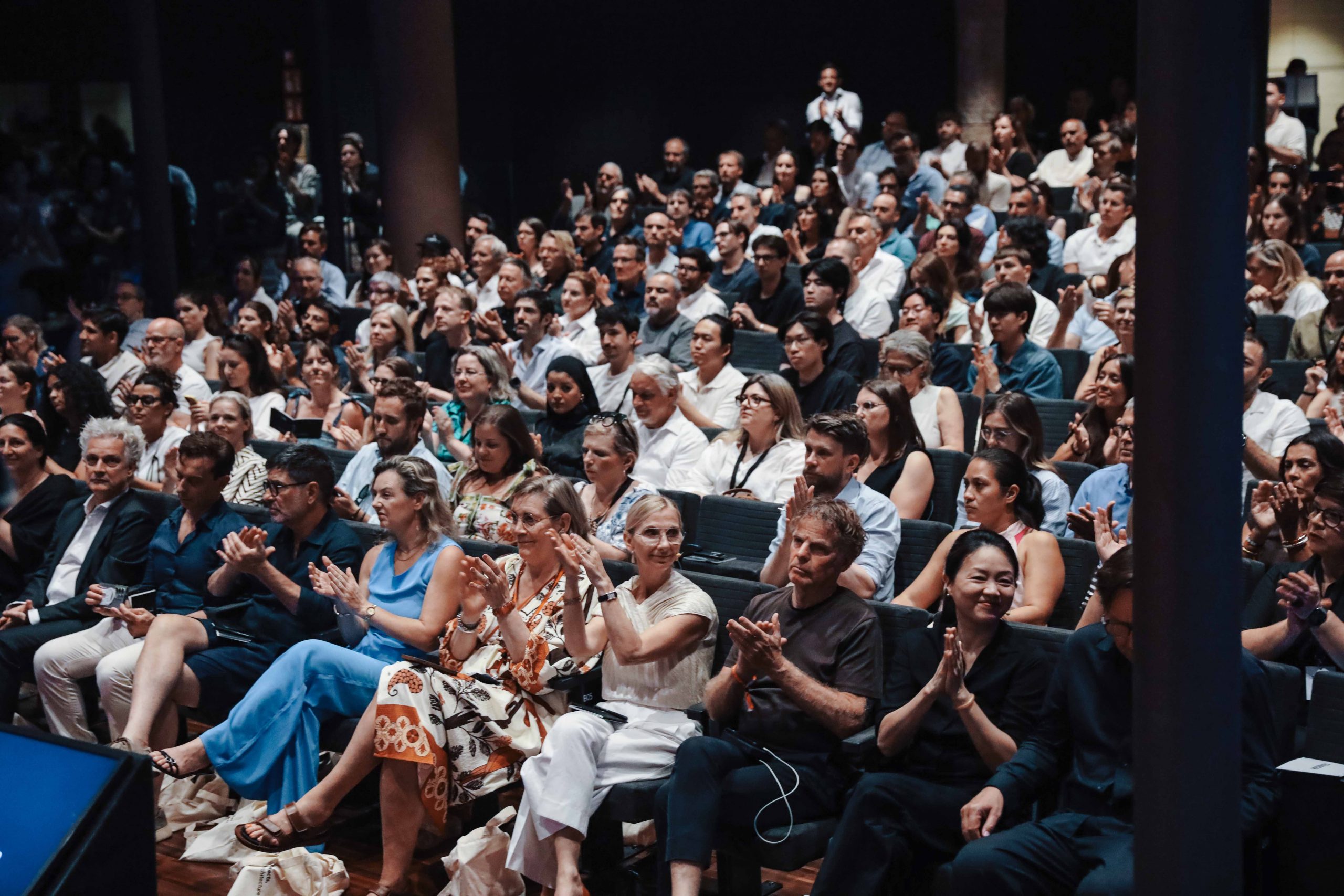
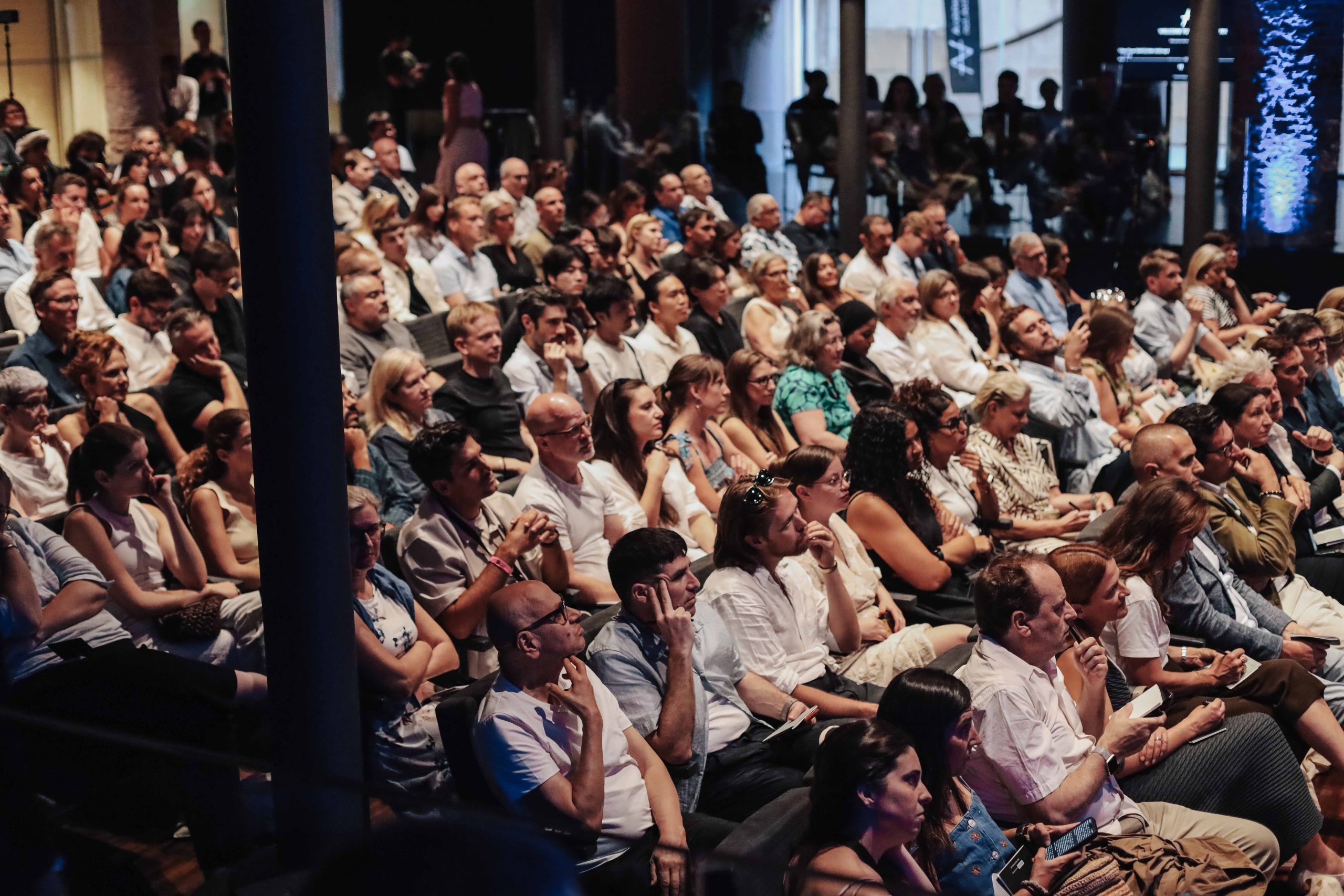
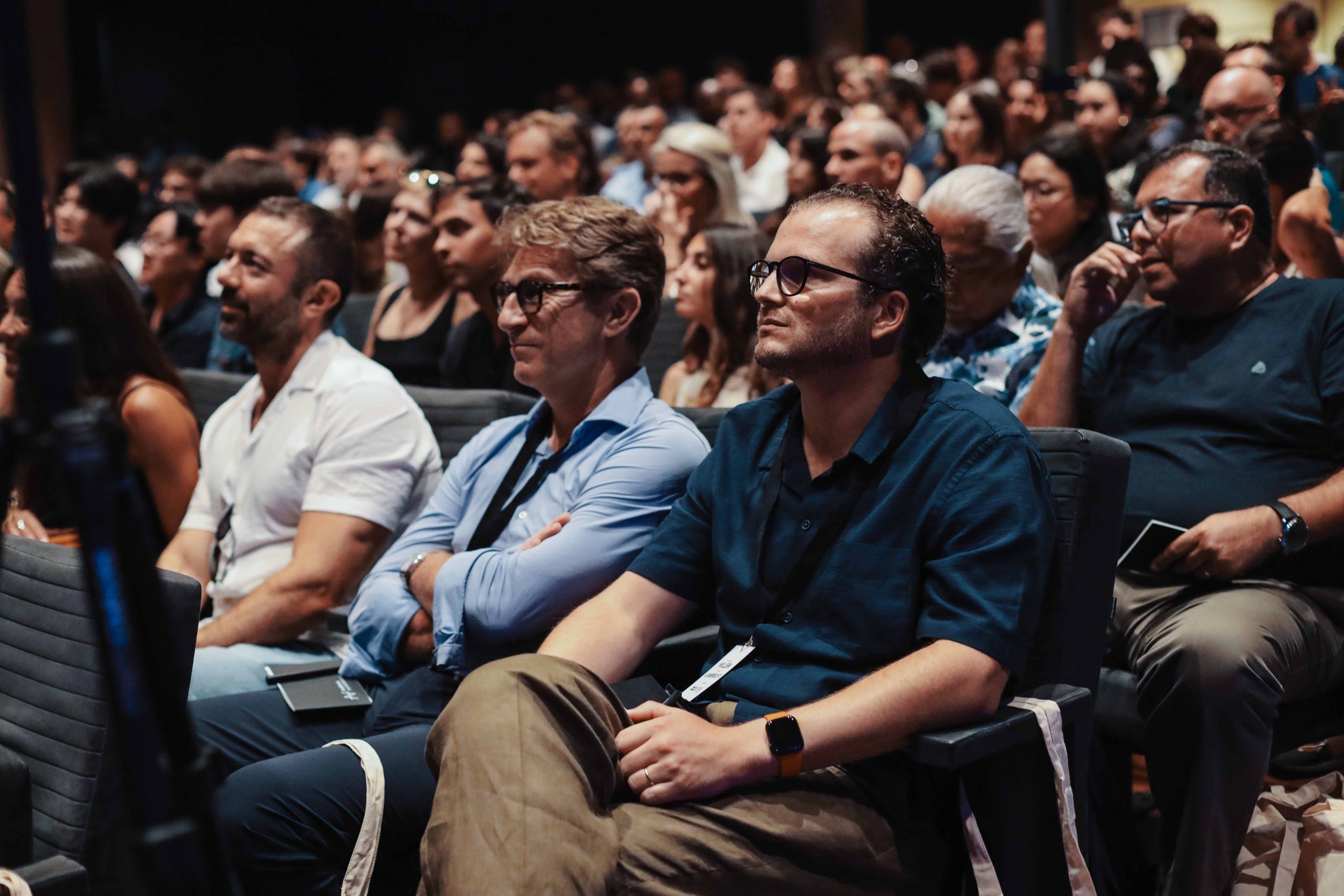
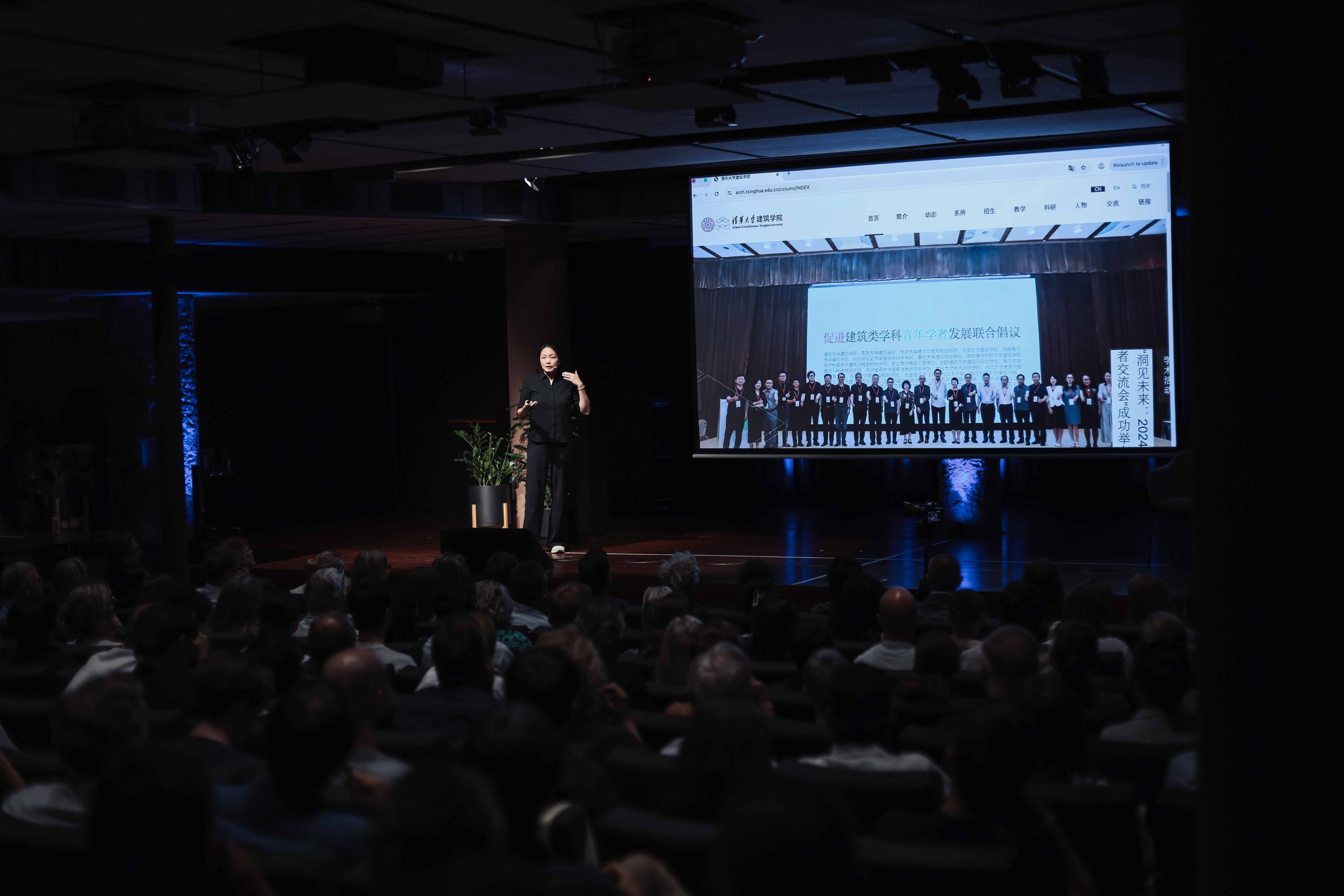
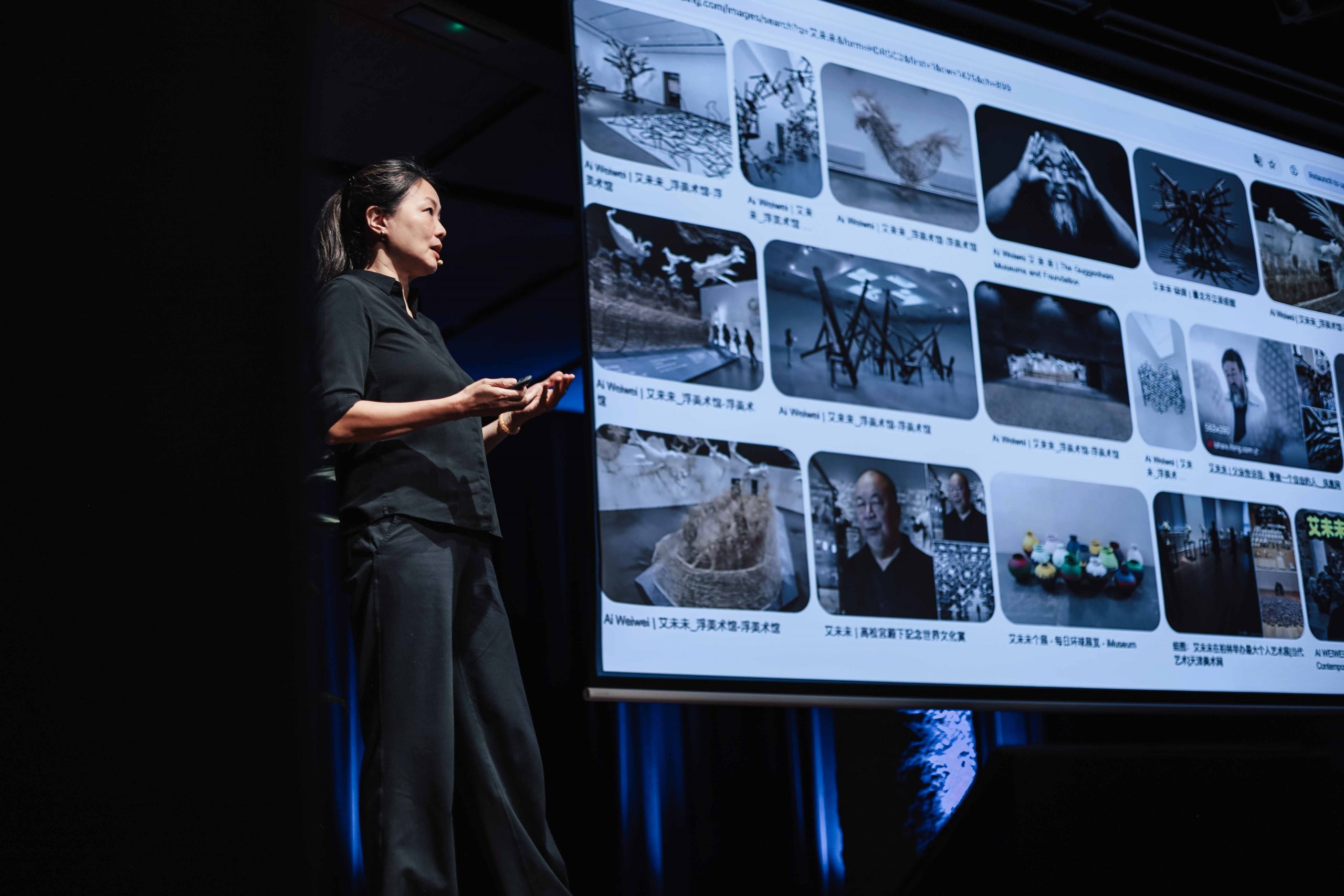
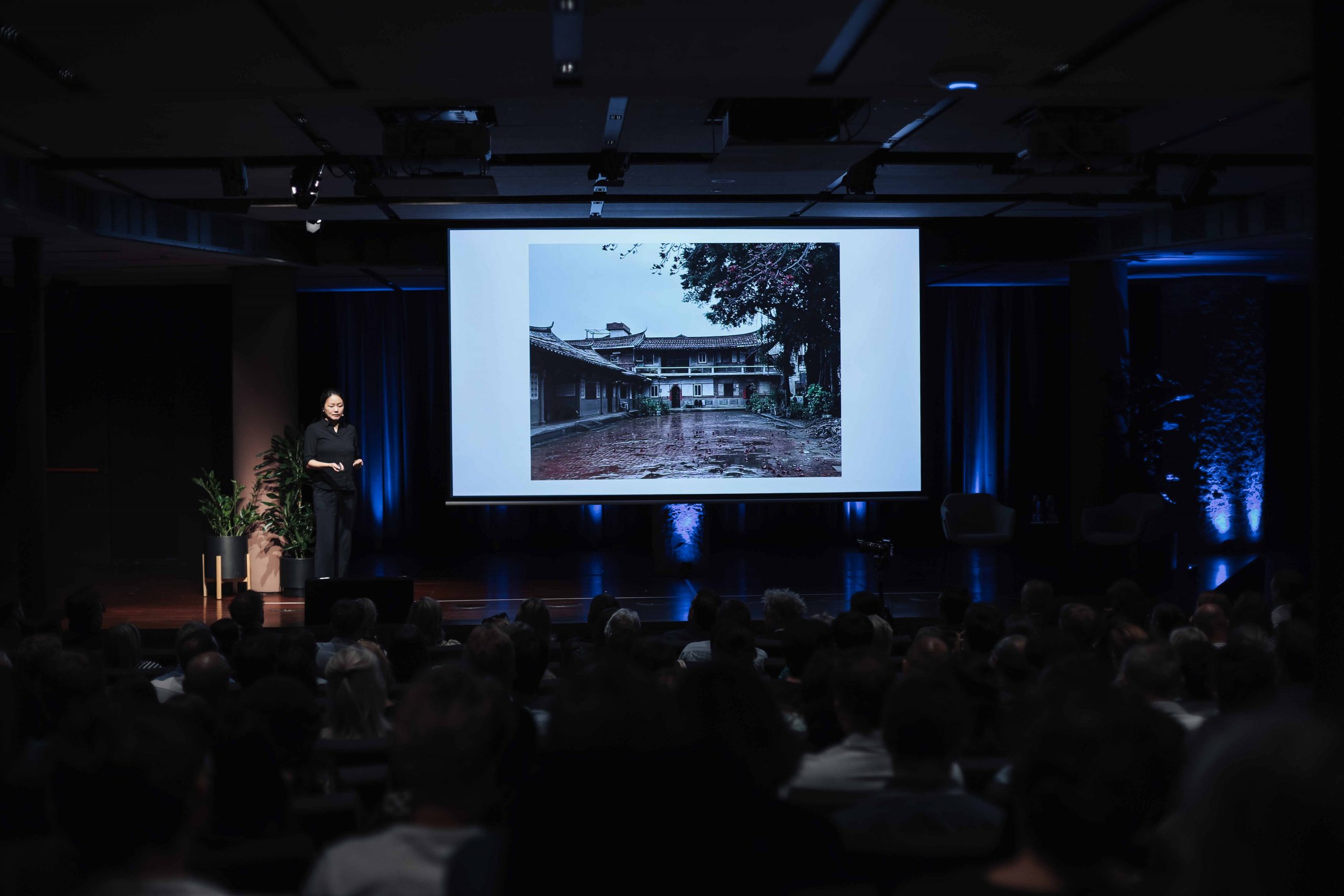
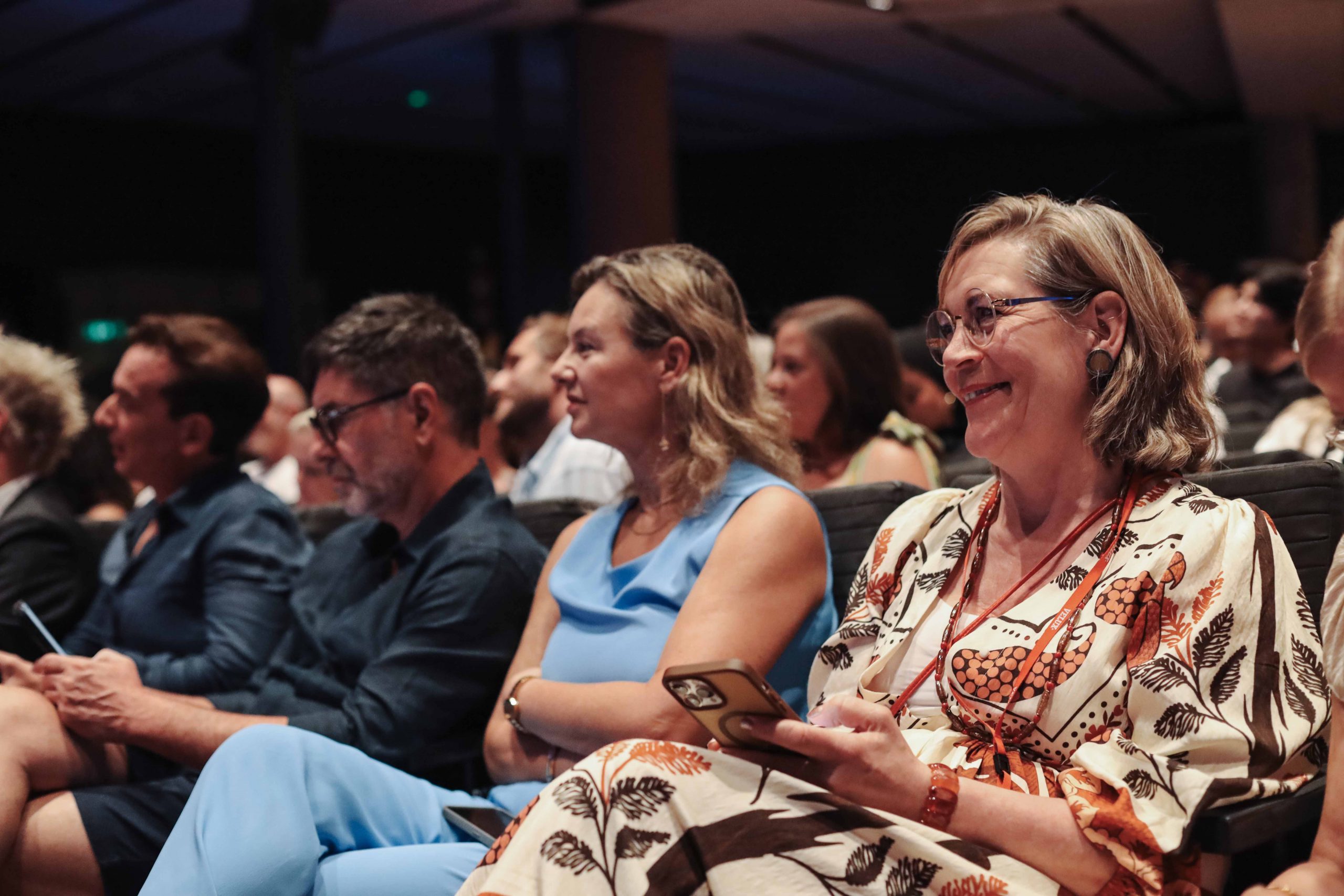
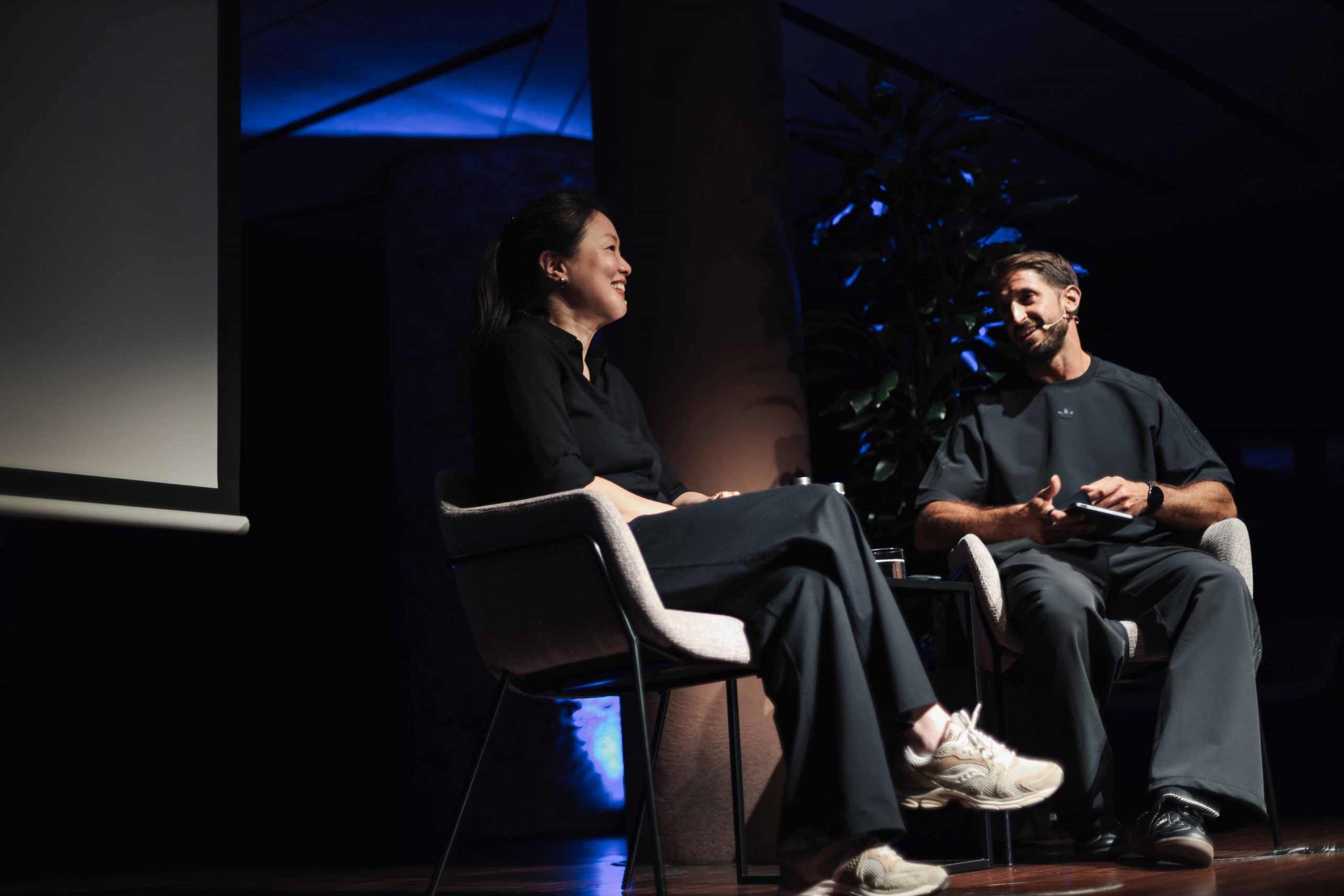
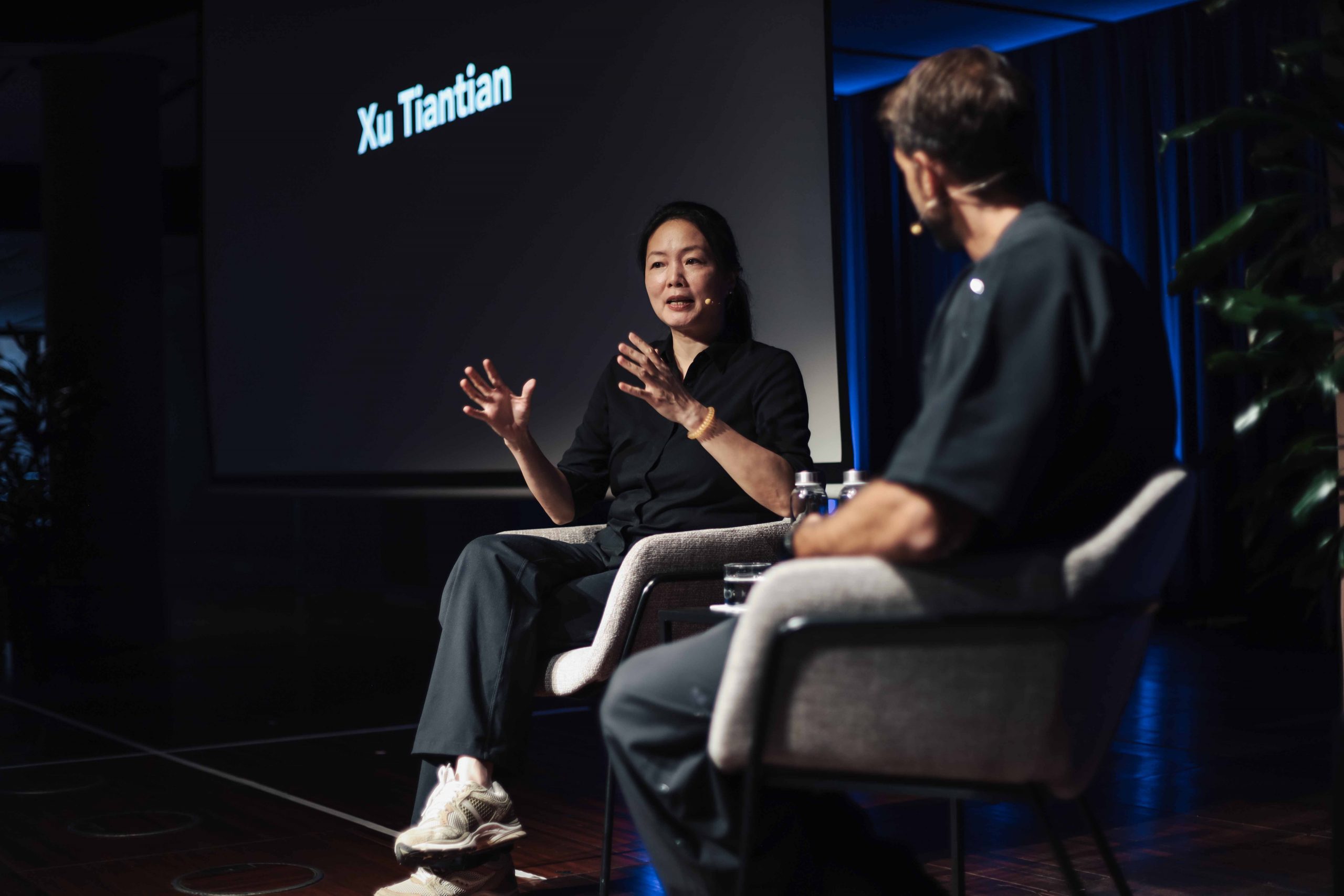
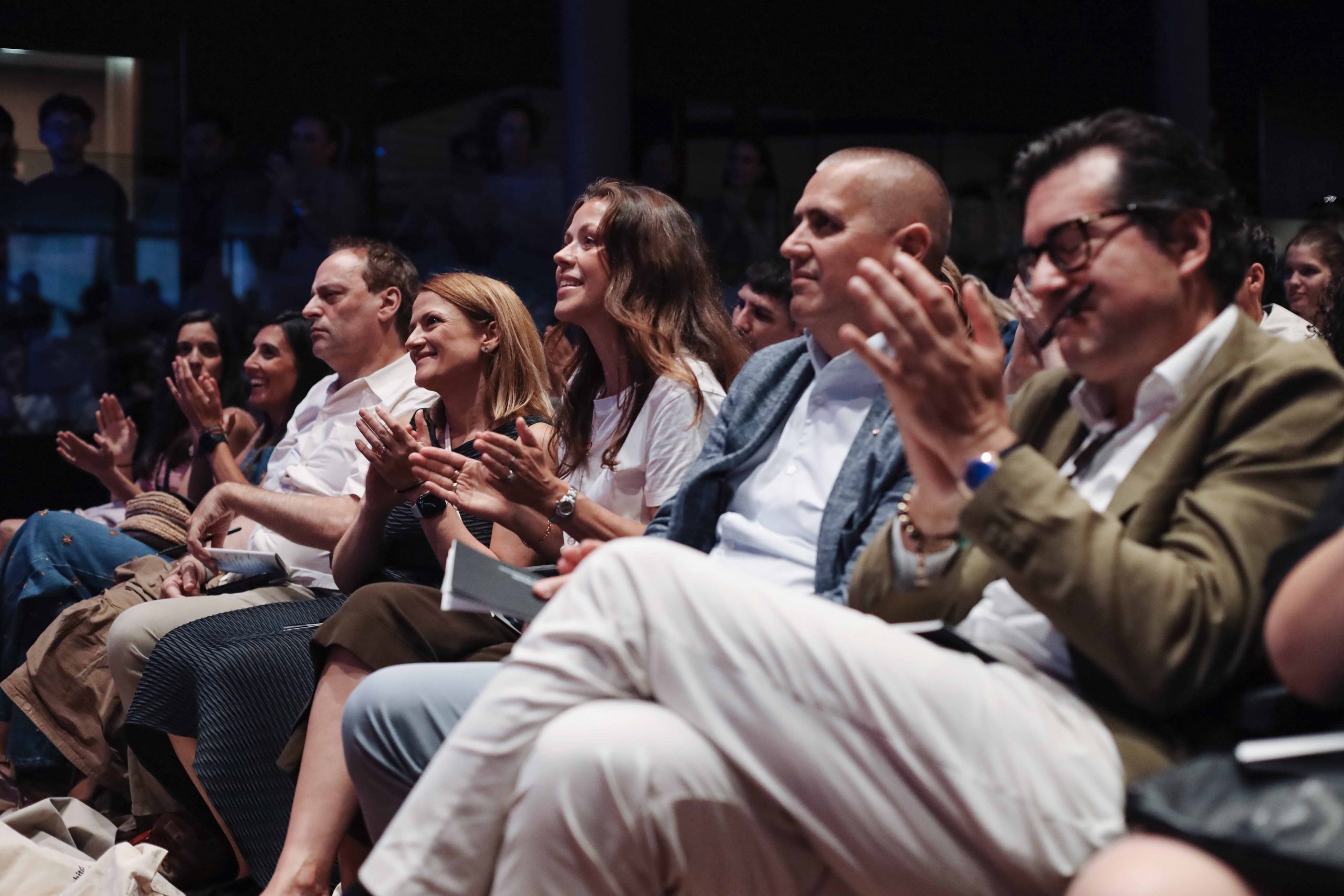
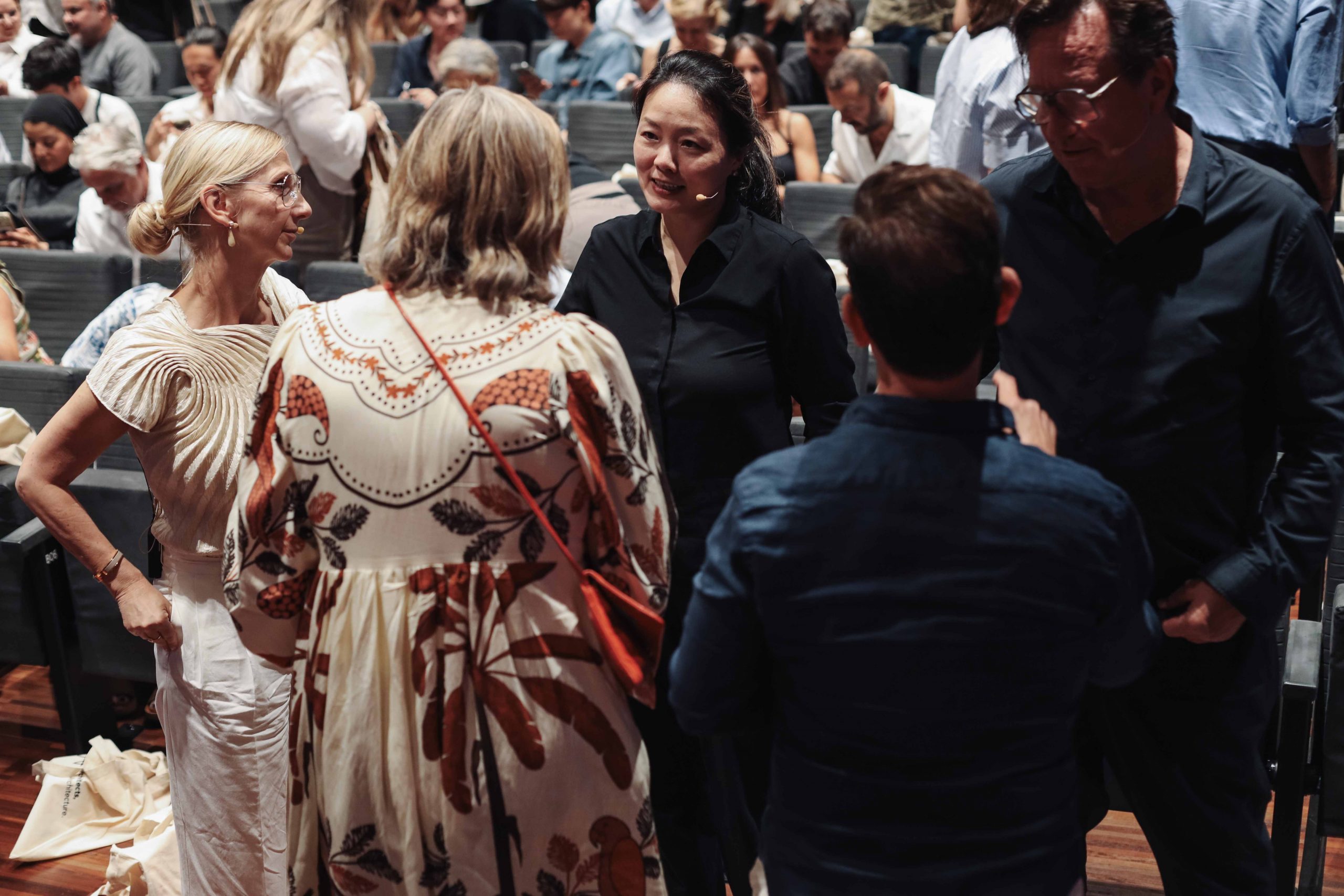
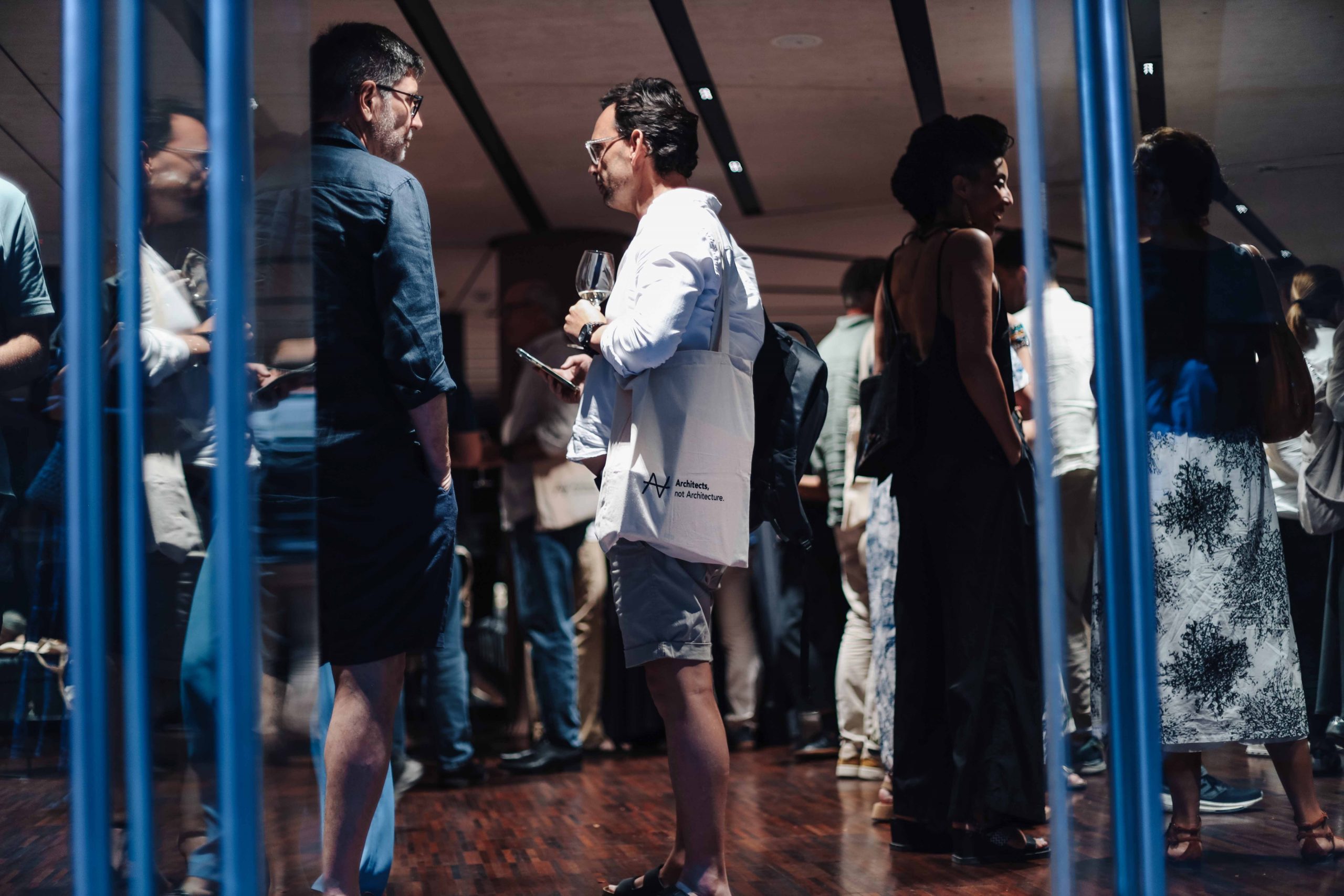
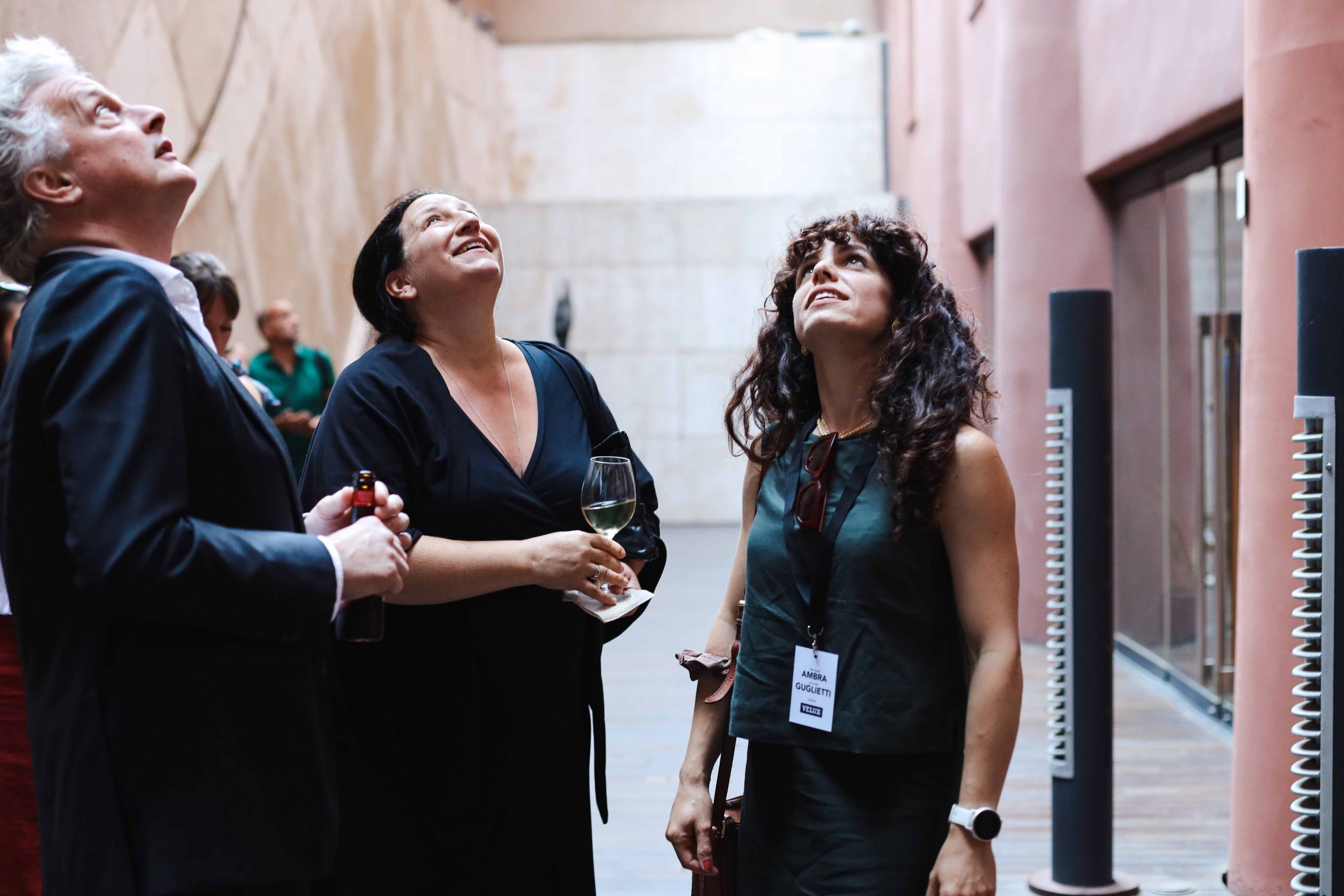
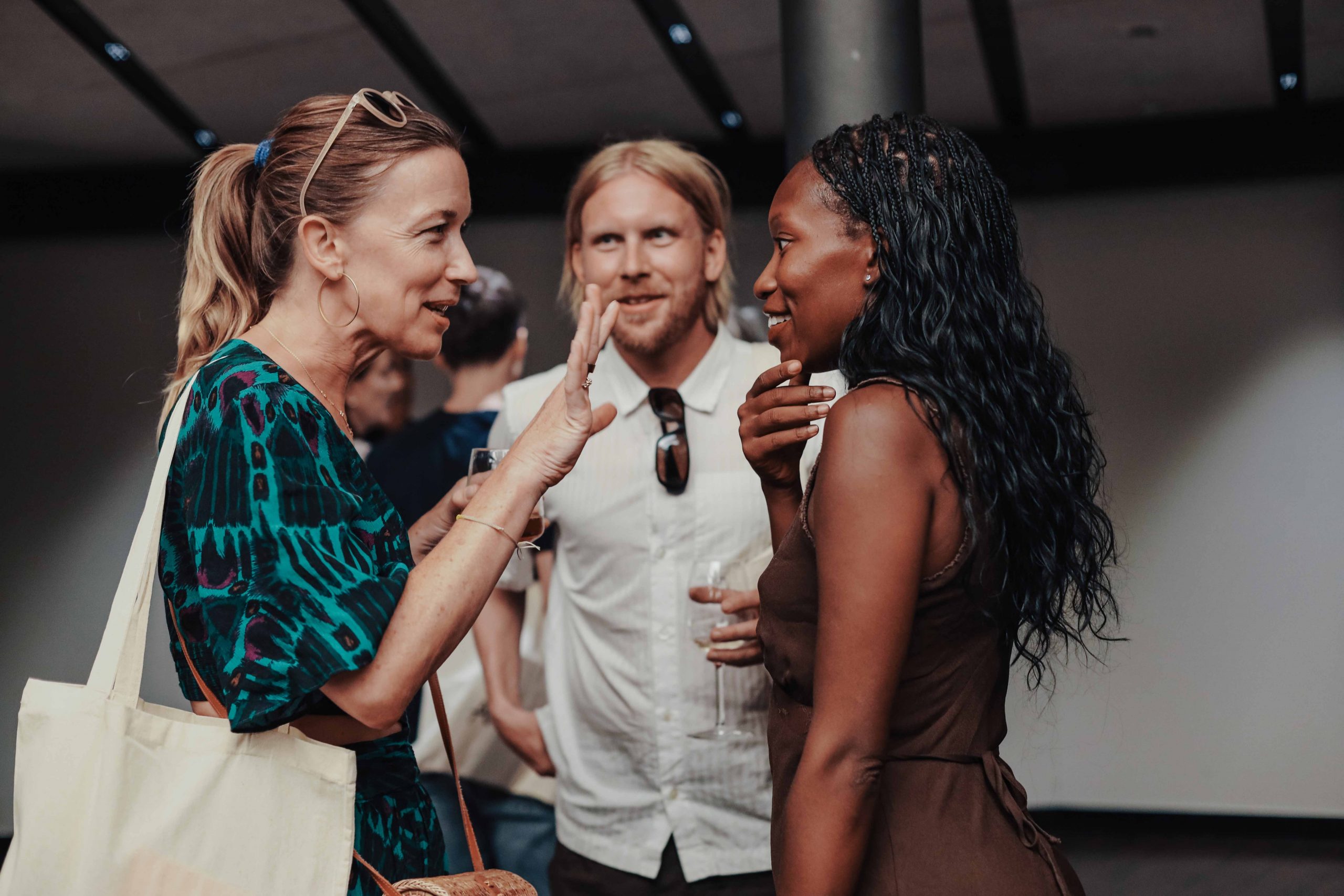
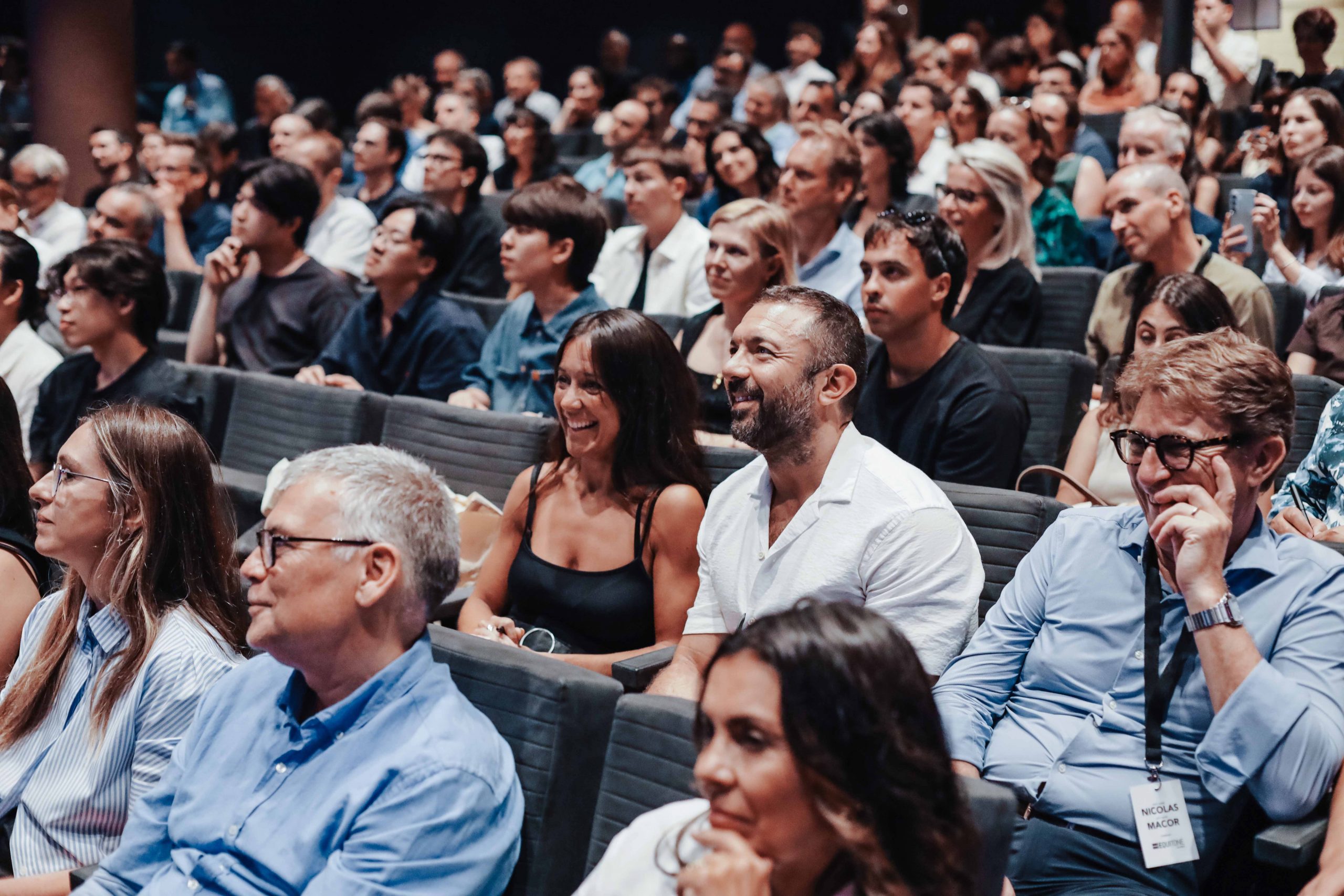
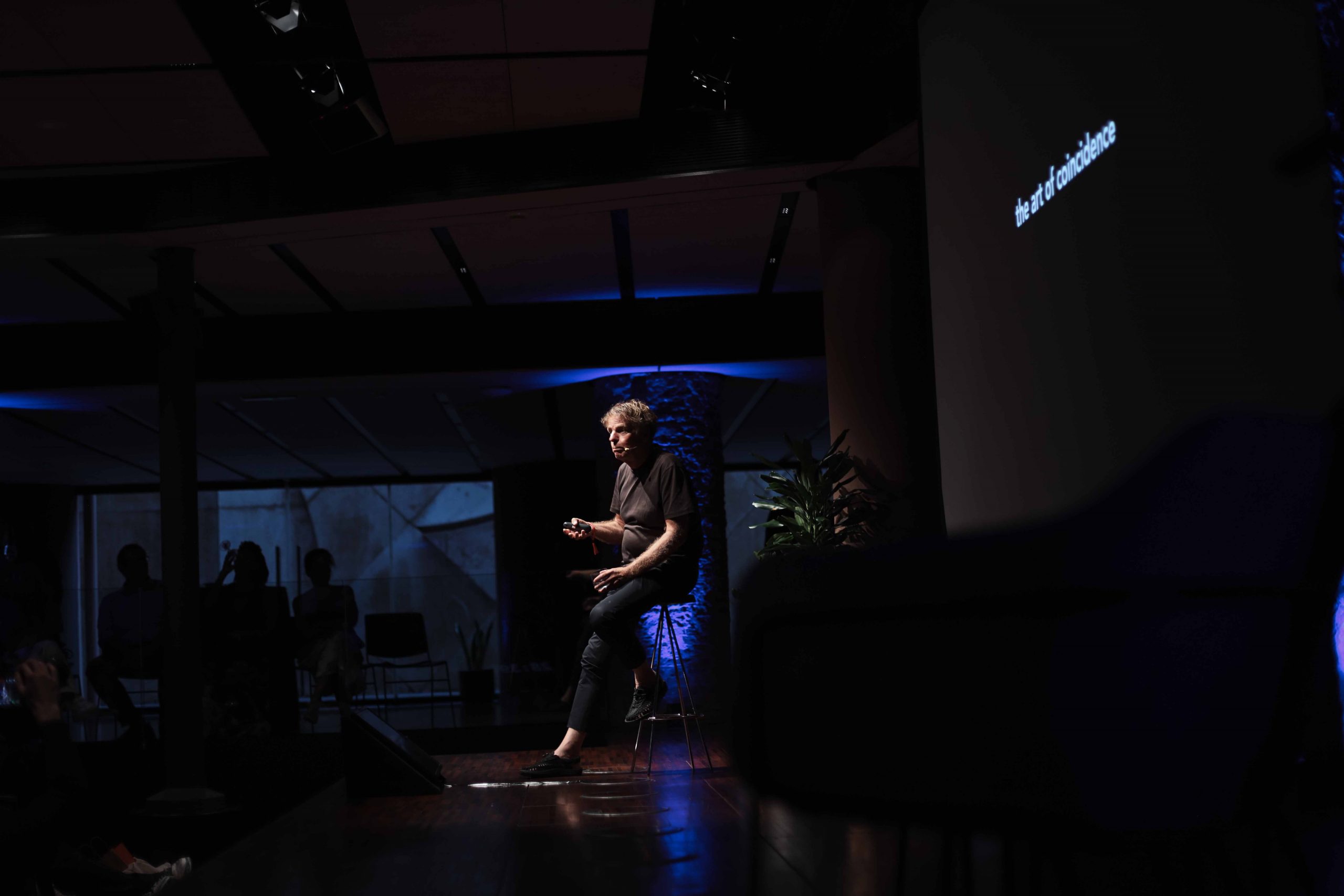
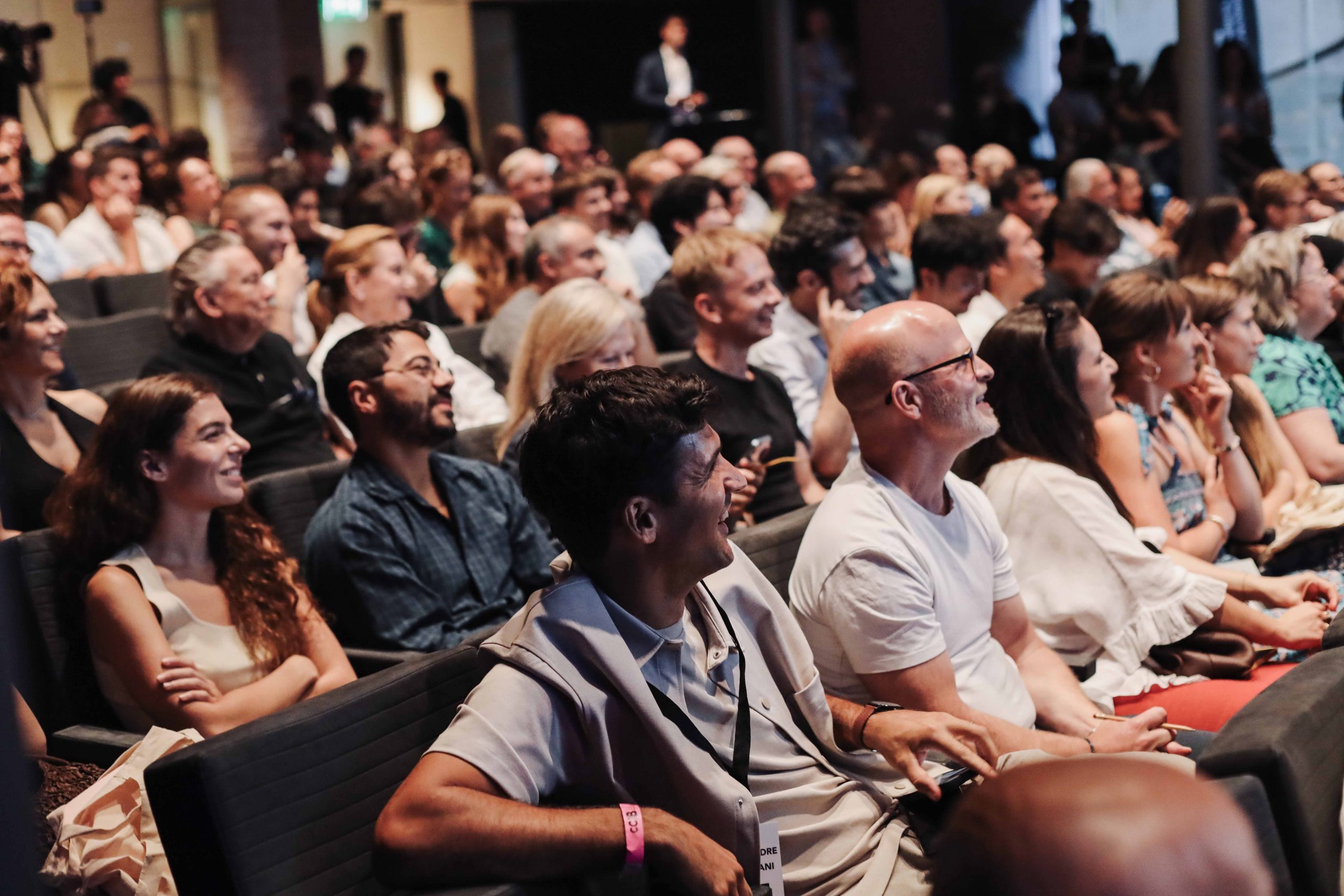
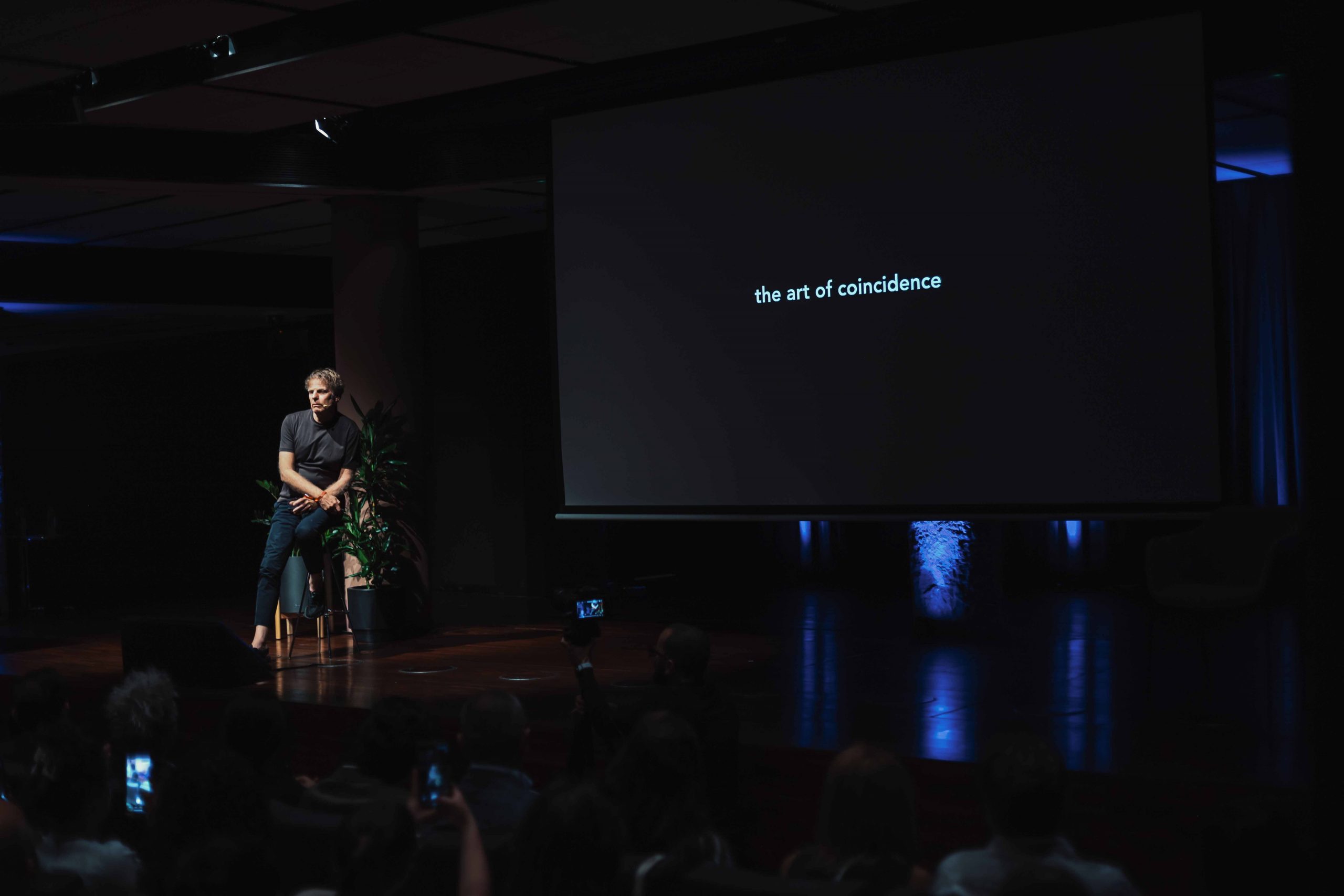
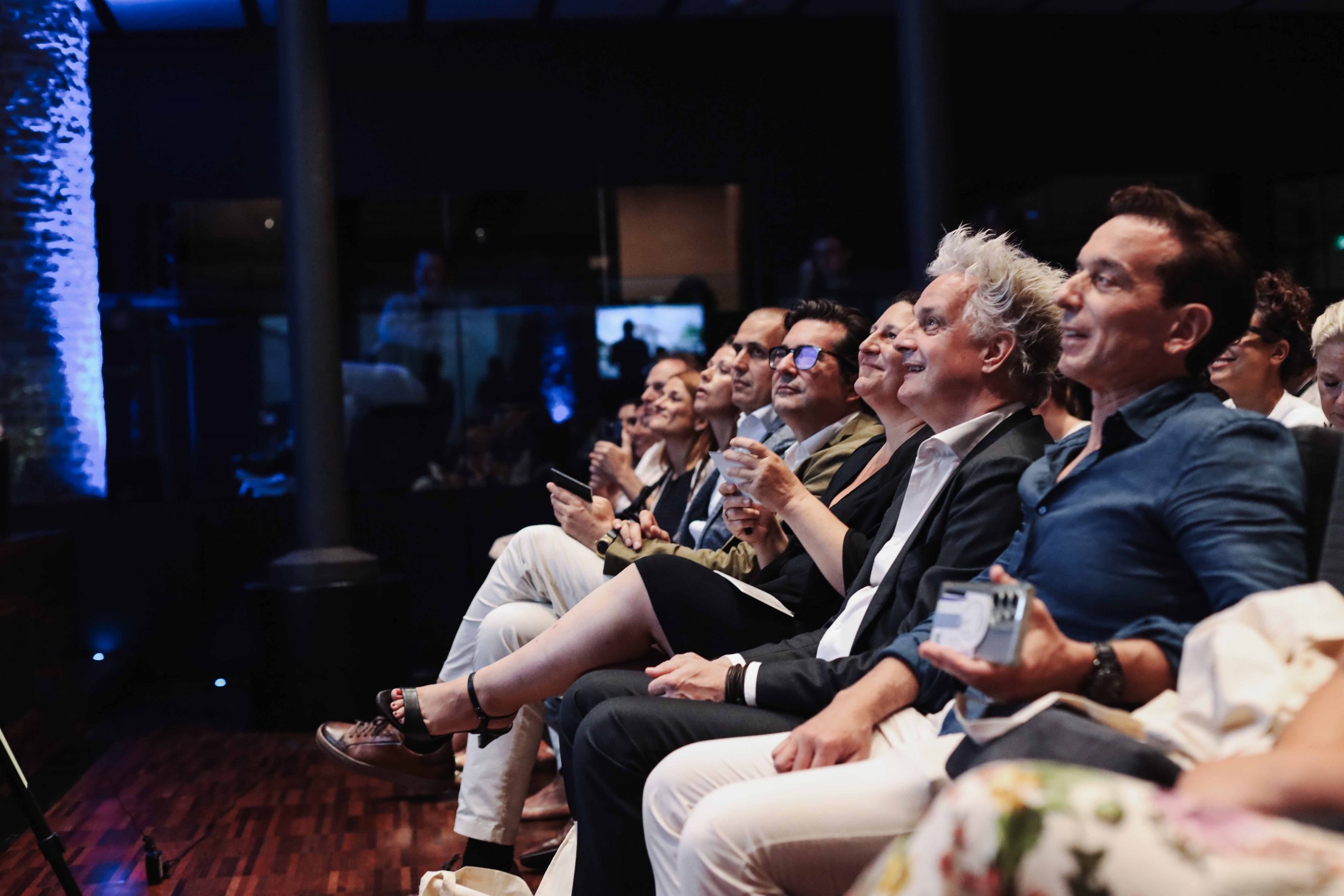
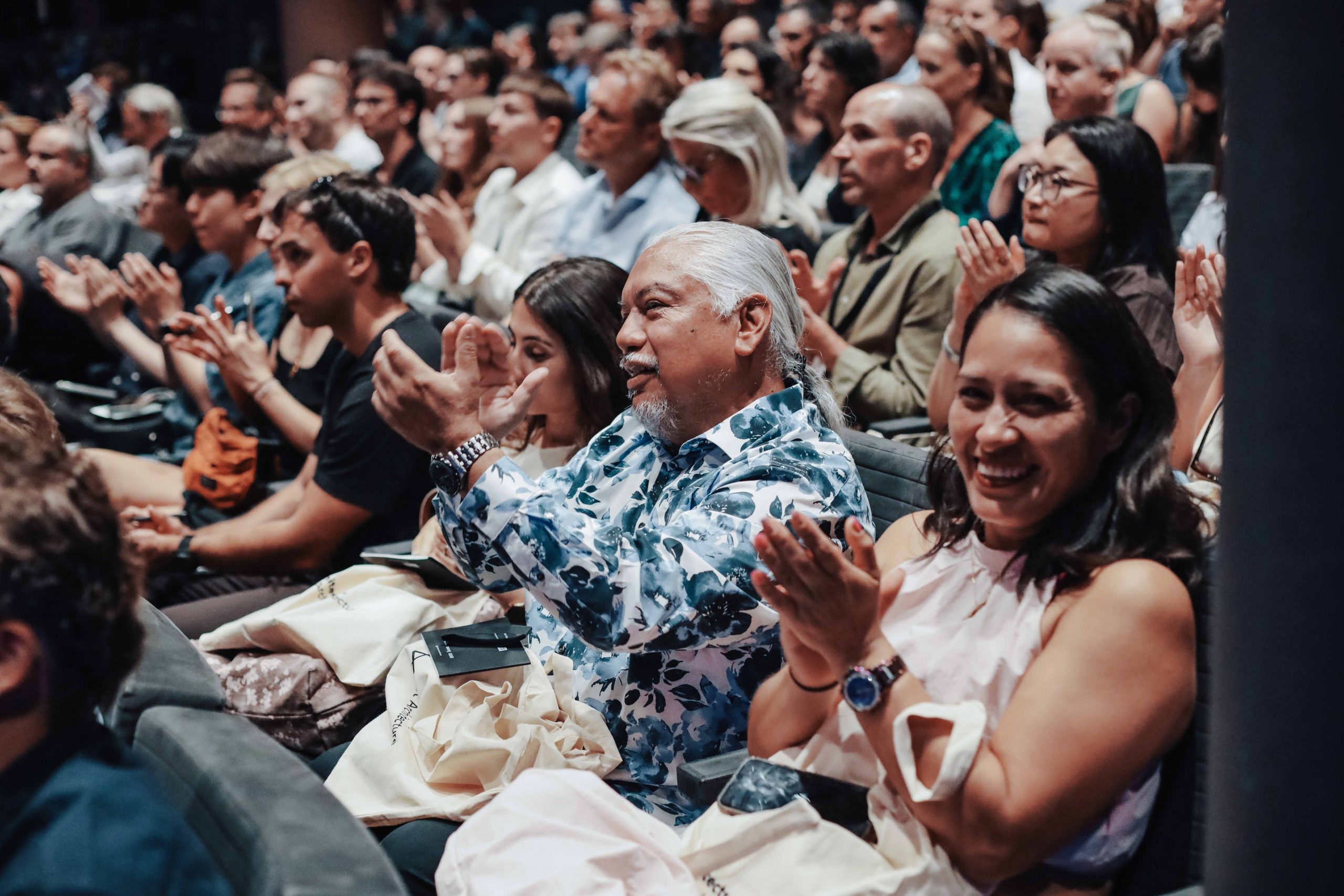
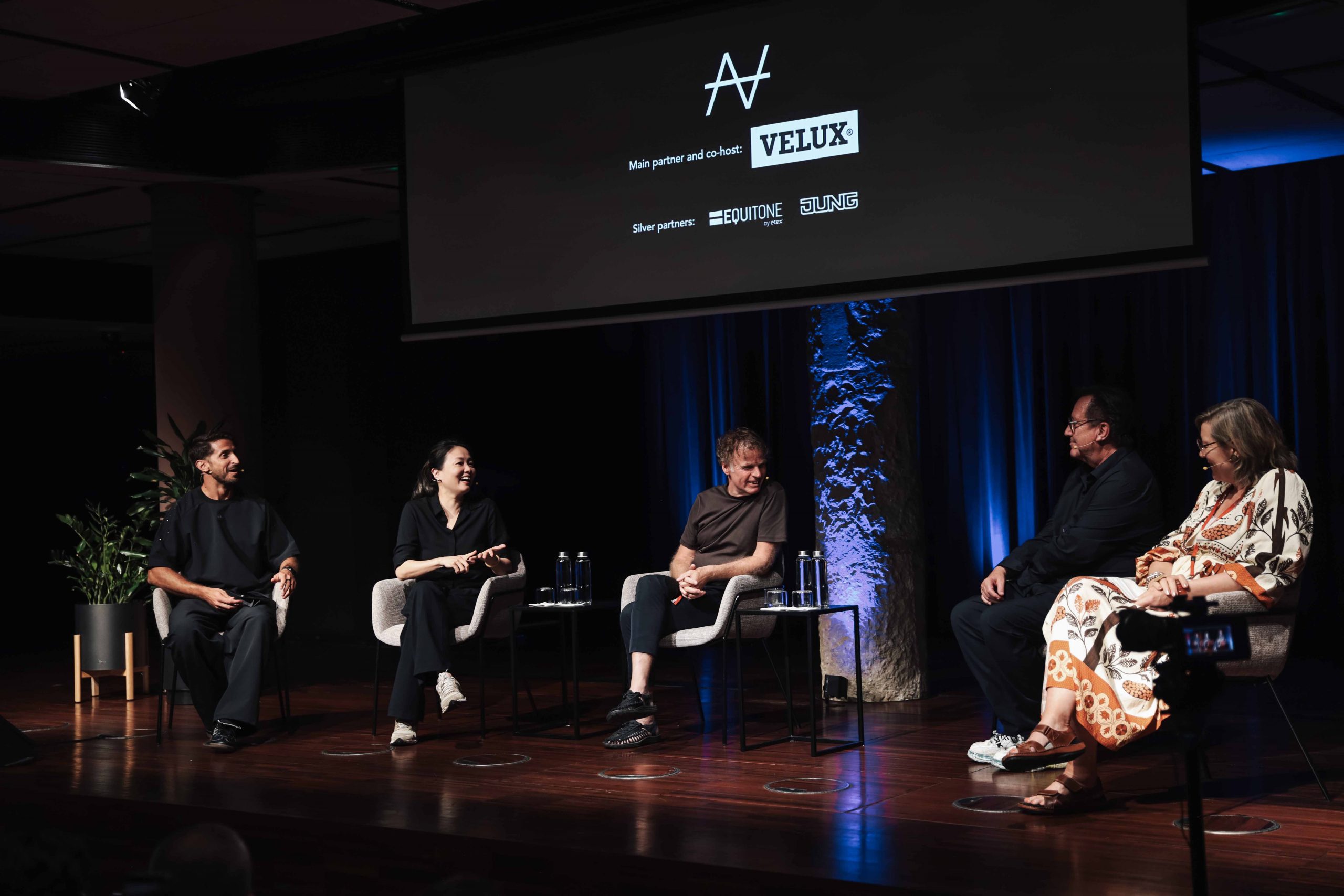
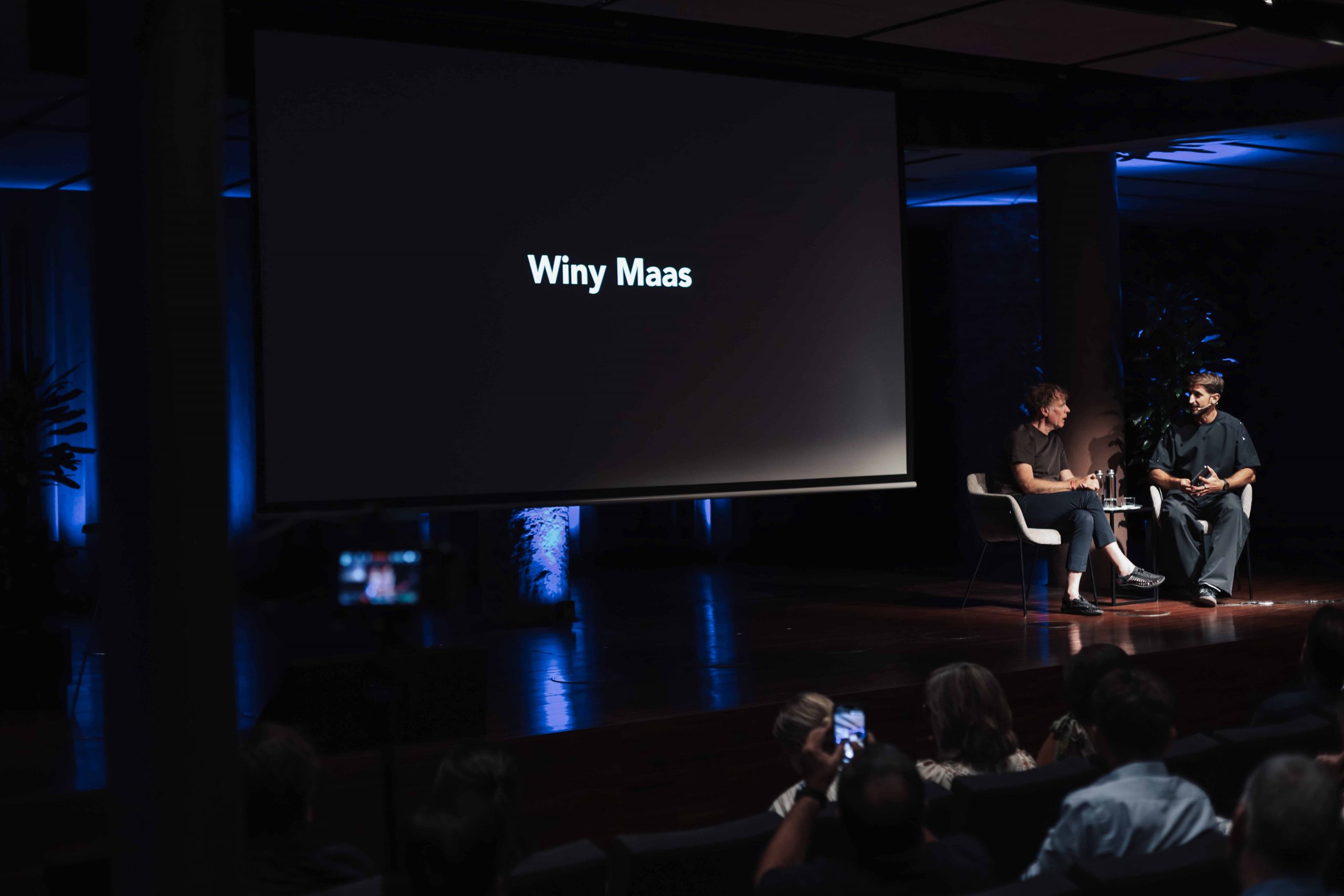
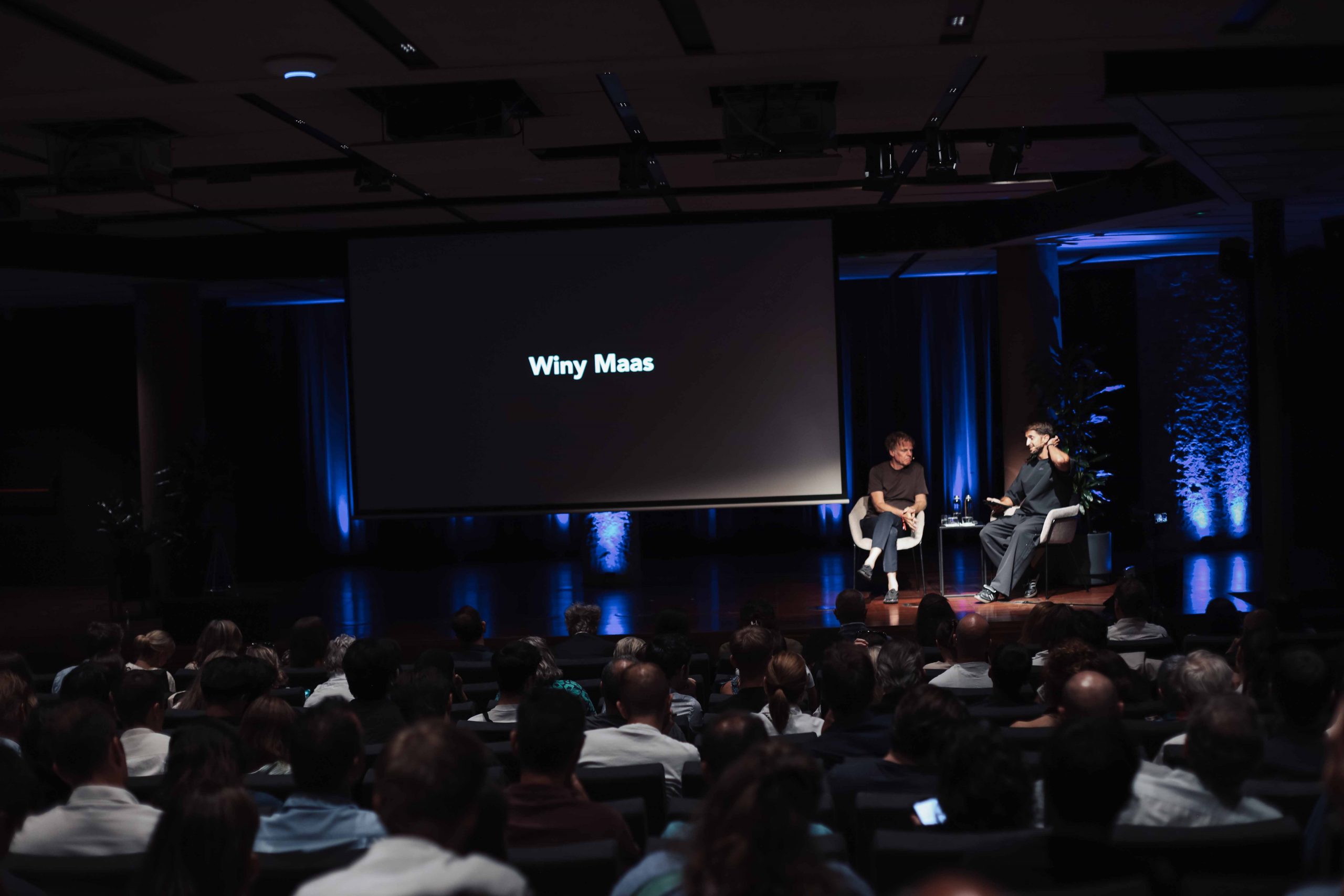
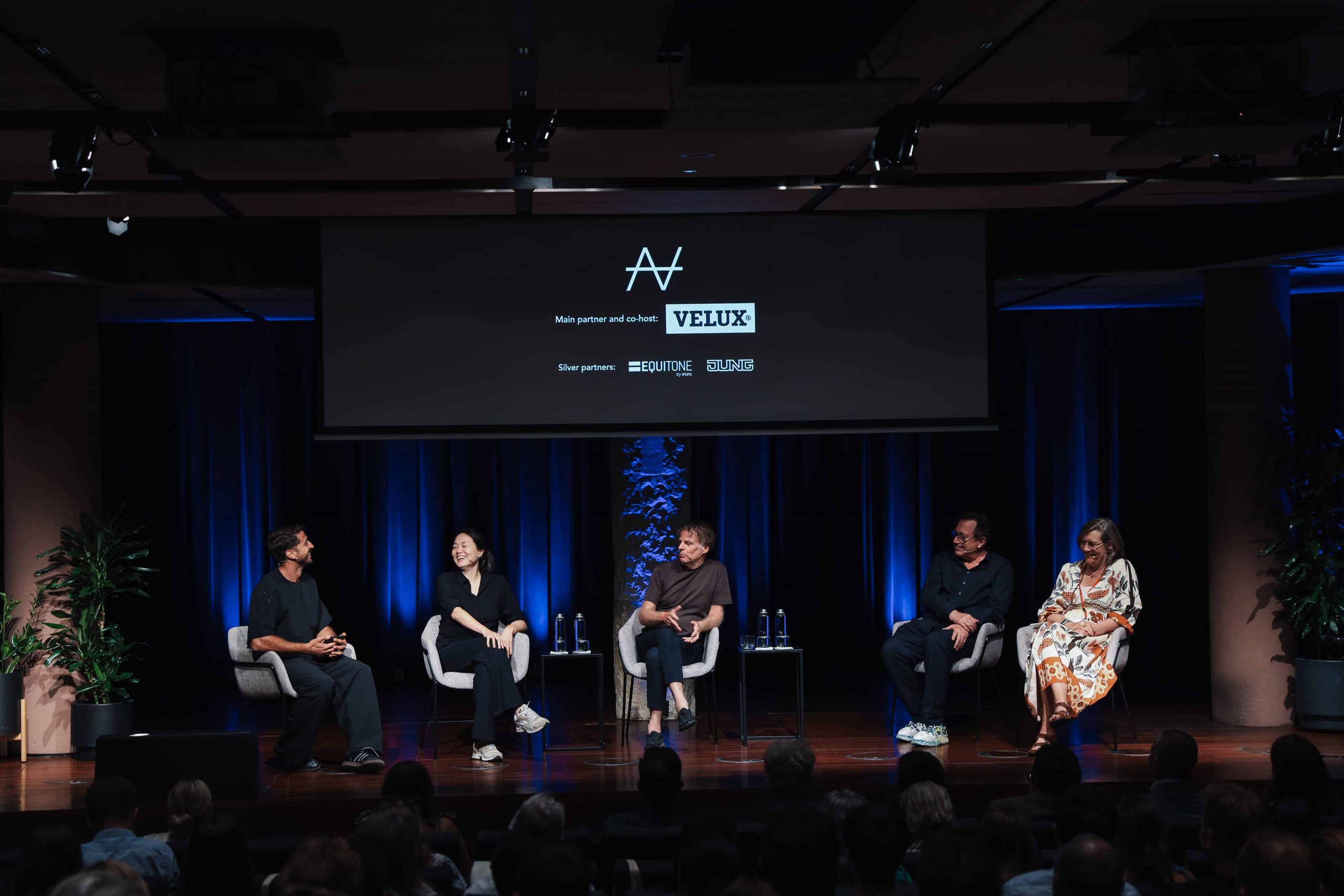
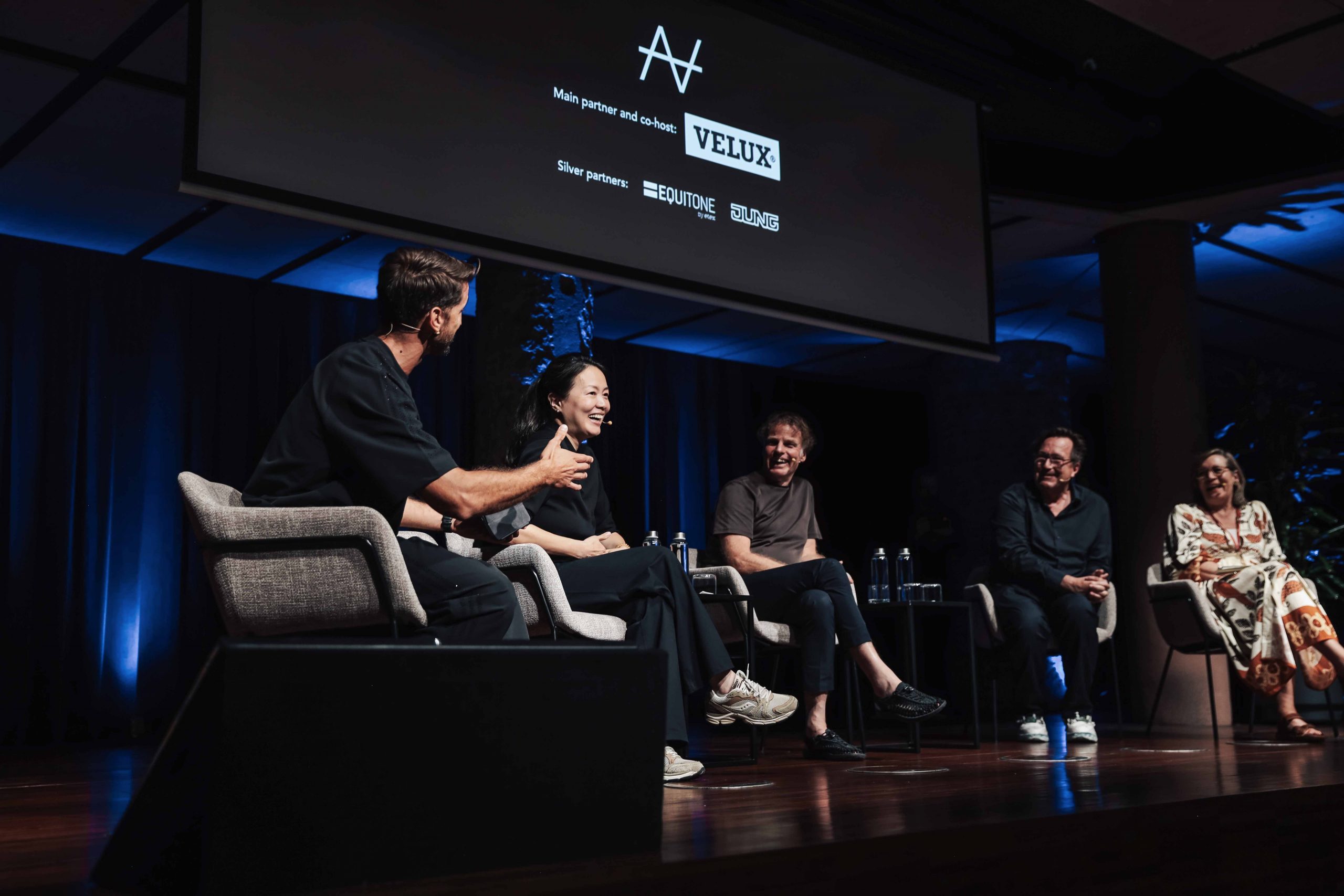
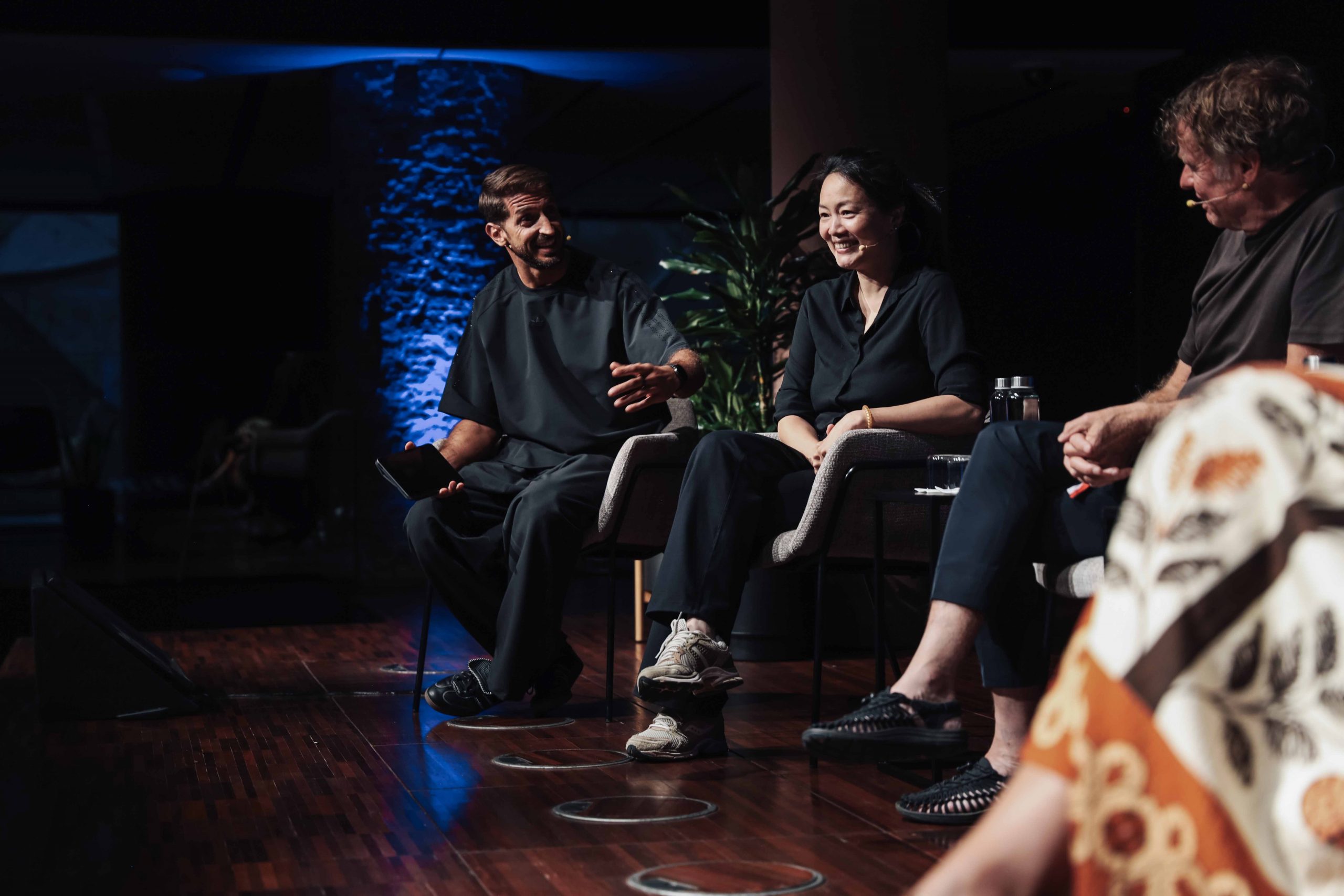
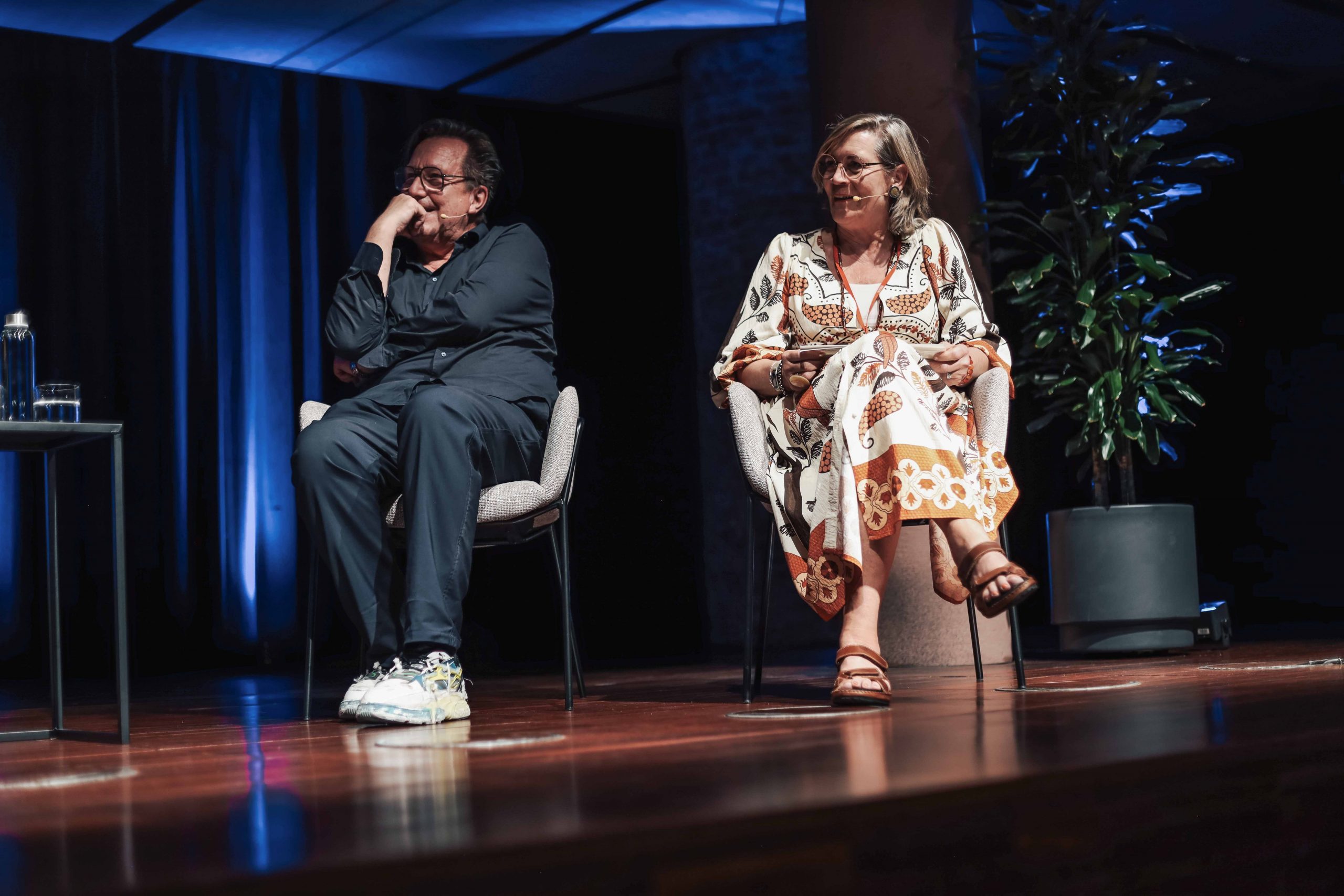
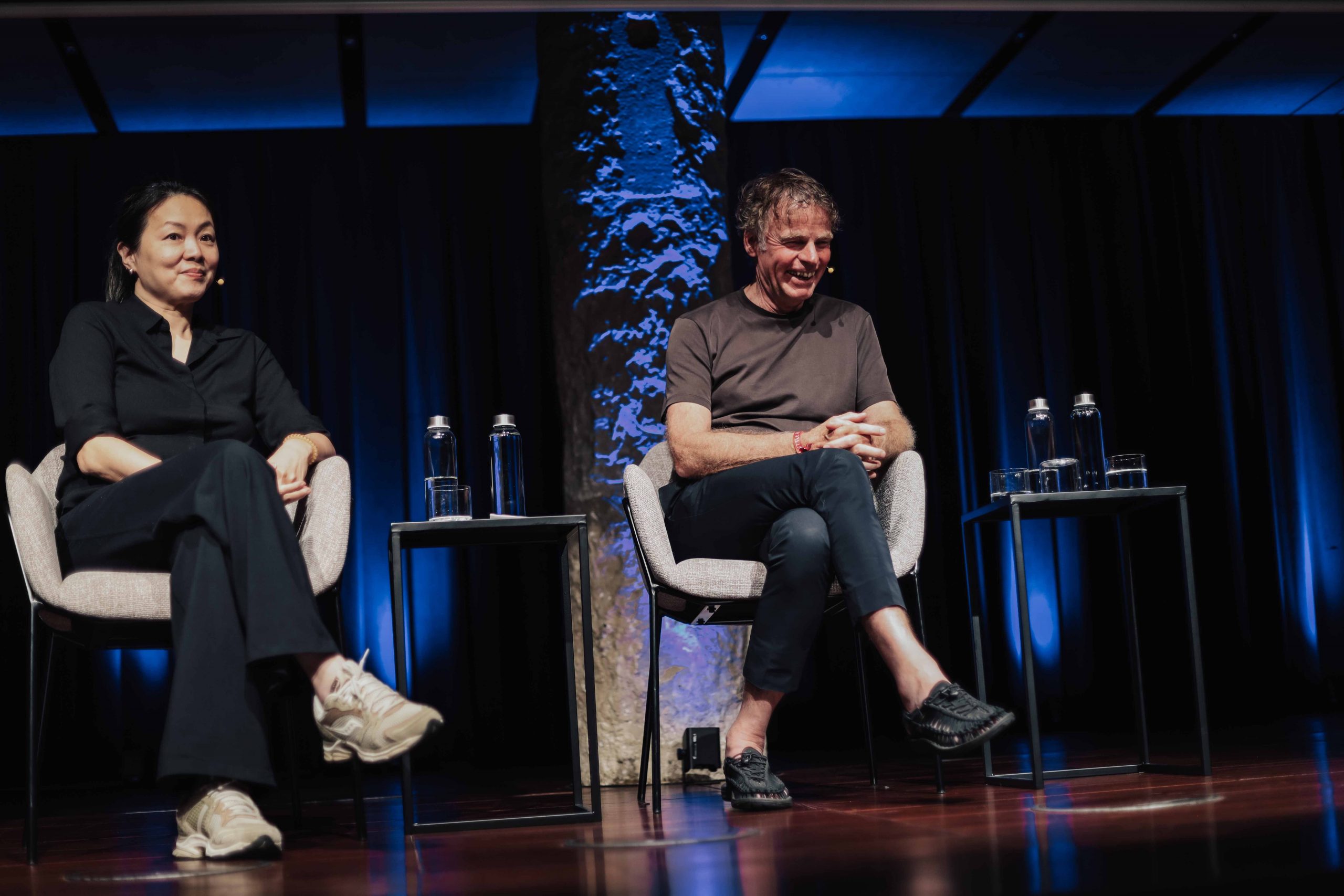
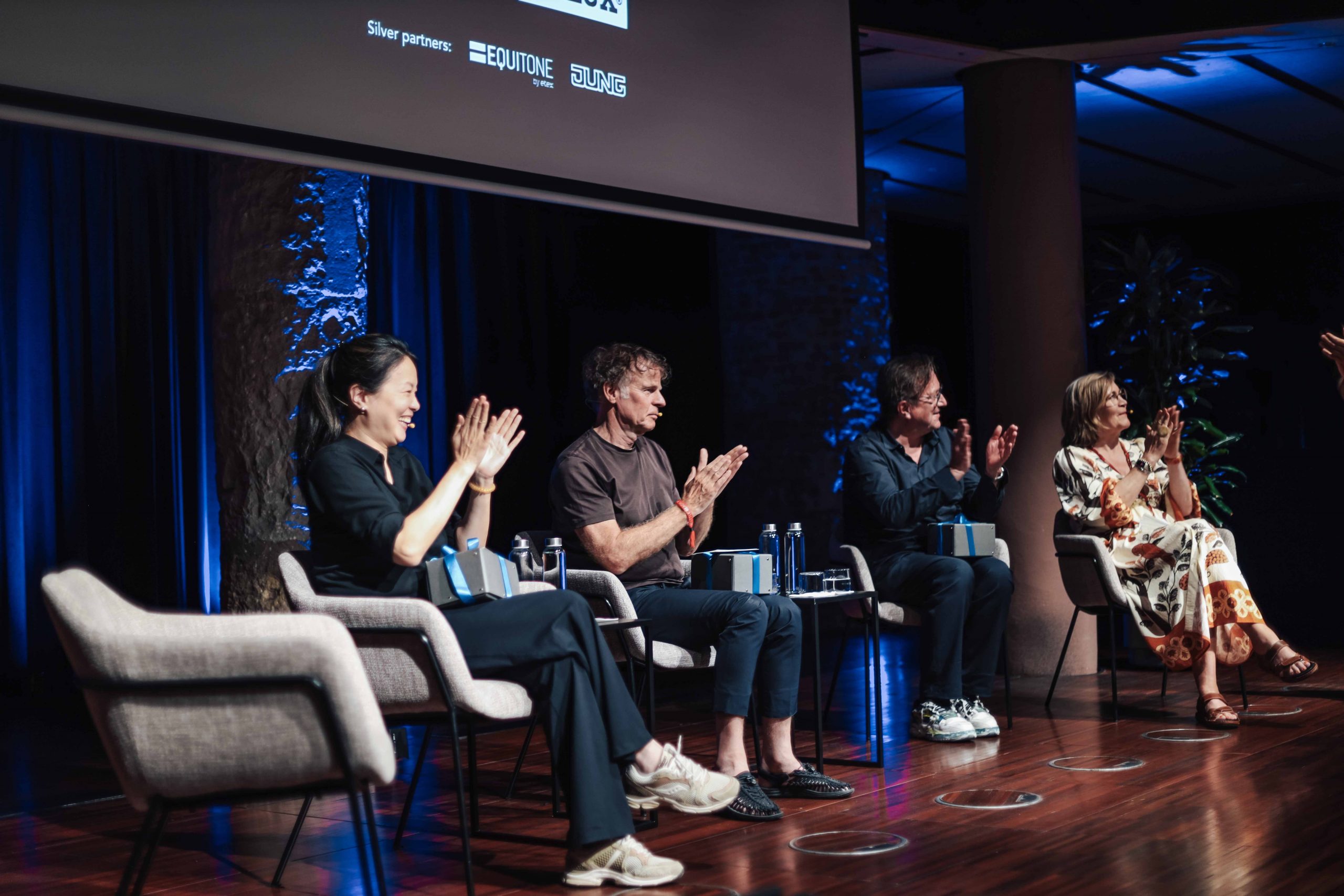
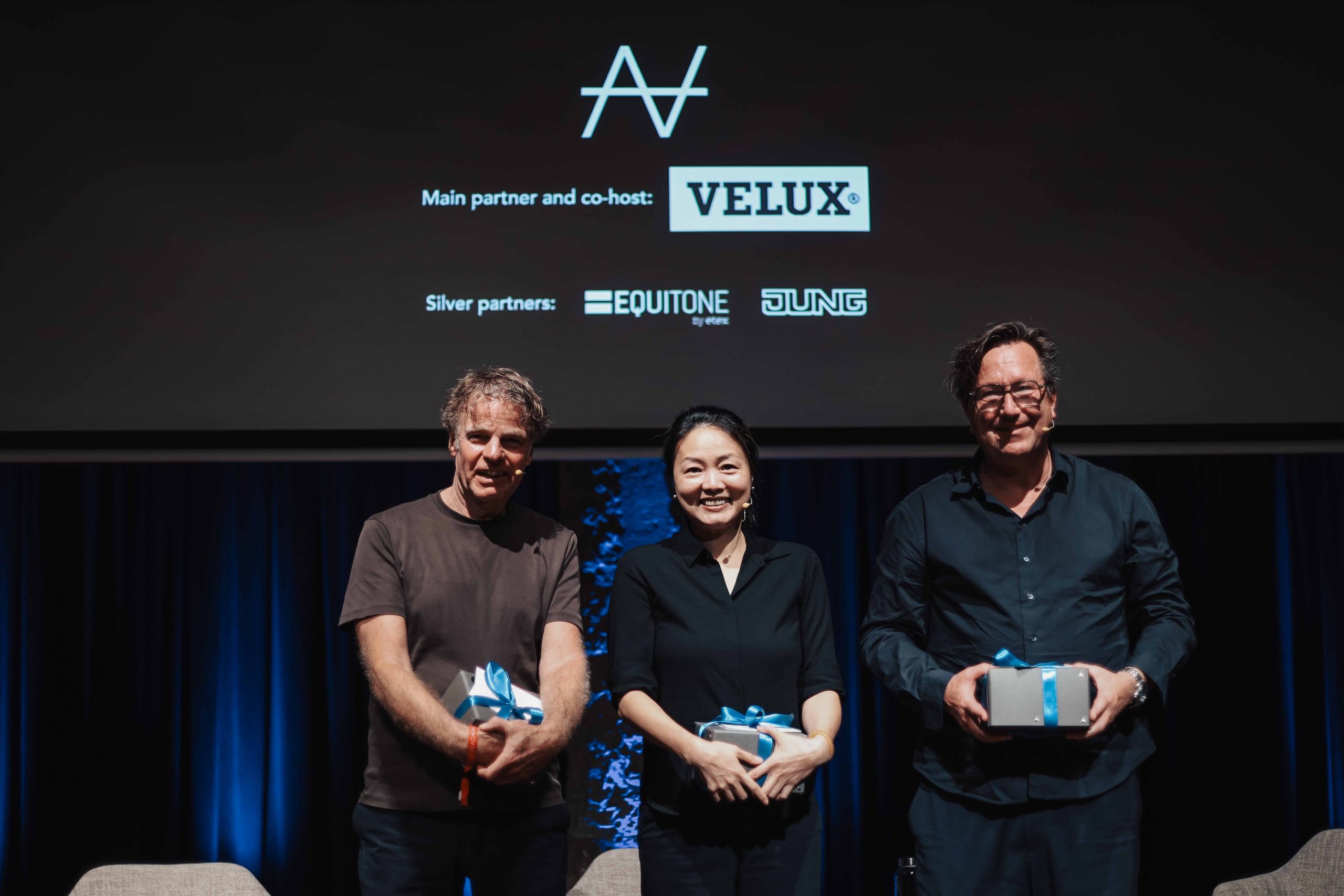
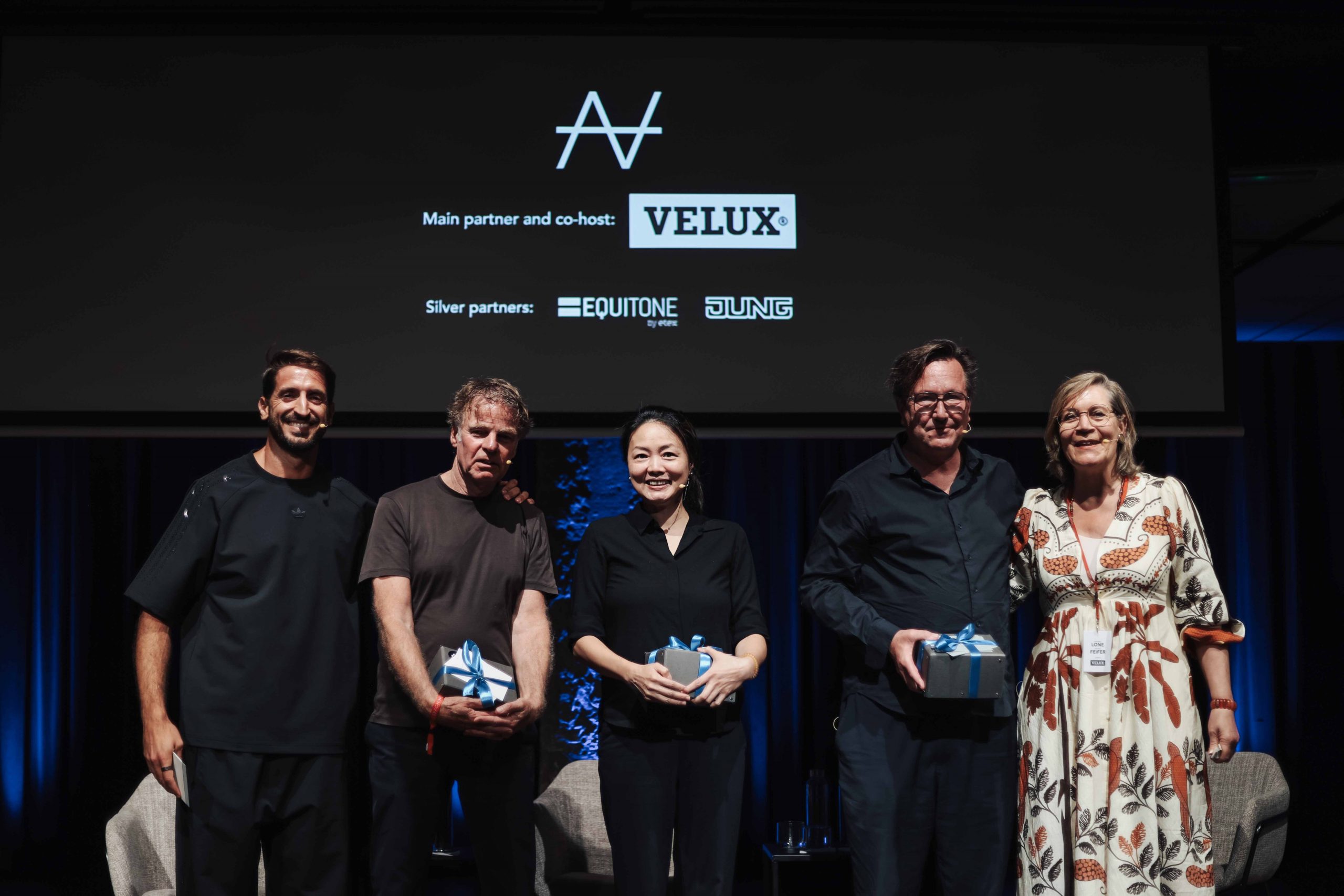
Architects, not Architecture and VELUX are joining forces for this special event in Barcelona focusing on the reuse and transformation of buildings, taking place at an extraordinary moment for the city.
Barcelona is the UNESCO-UIA World Capital of Architecture 2026 and the UIA World Congress of Architects runs in Barcelona from June 28 to July 2, under the theme “Becoming. Architectures for a Planet in Transition”. AnA Barcelona 2026 takes place on the evening of July 2, the final night of the Congress, offering the international architecture community the perfect close to a landmark week: an intimate evening of personal stories, candid reflection, and genuine inspiration.
The global event series “Architects, not Architecture” (AnA) has hosted events in over 25 countries across 4 continents, providing a rare opportunity to learn about globally renowned architects from a genuine perspective. The series’ unique format invites the speakers to talk about their paths, their most important influences, and the influential moments in their careers, with a single golden rule: speakers are not allowed to discuss their own projects. This approach allows for deeply personal and engaging narratives, offering a fresh and intimate look at the minds behind the architecture.
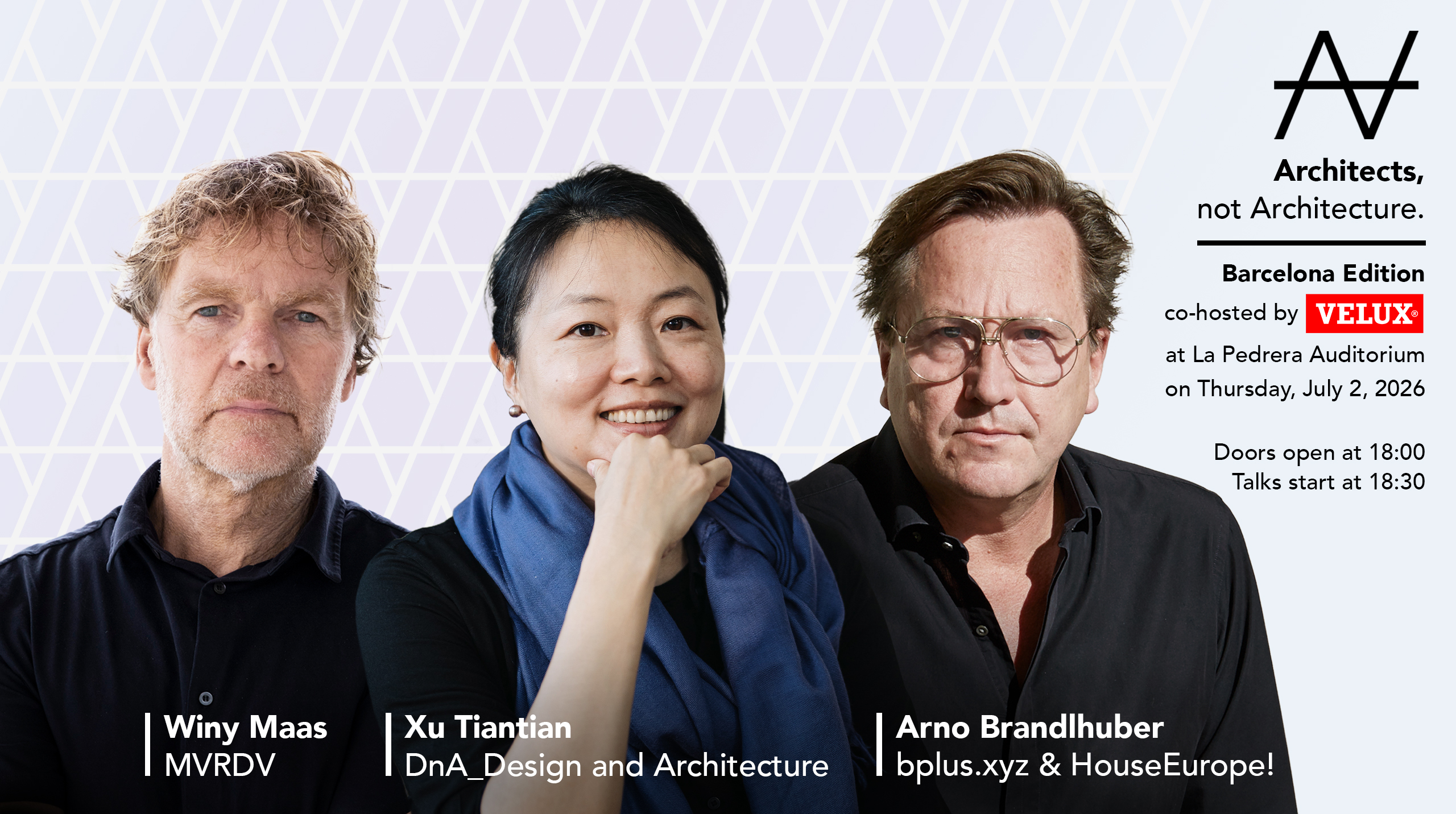
On Thursday, July 2, 2026, at the iconic Auditorium of La Pedrera, Casa Milà, one of Barcelona’s most celebrated Gaudí landmarks and a UNESCO World Heritage Site, we will bring together three internationally renowned architects whose work is united by a common thread of the reuse and transformation of buildings. This edition places a special focus on how architects across different contexts and scales are reimagining, adapting, and breathing new life into existing structures, addressing one of the most urgent and relevant conversations in architecture today.
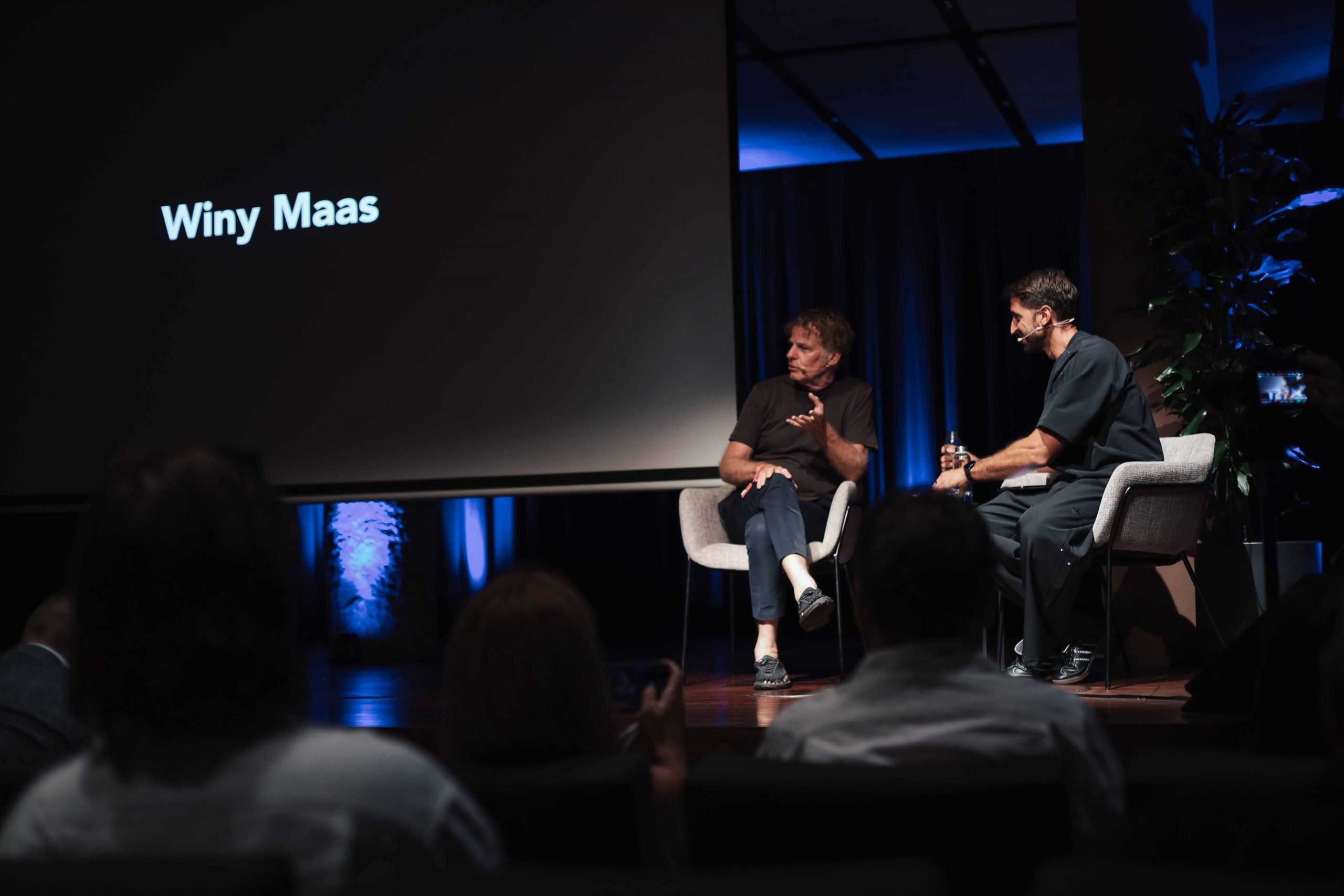
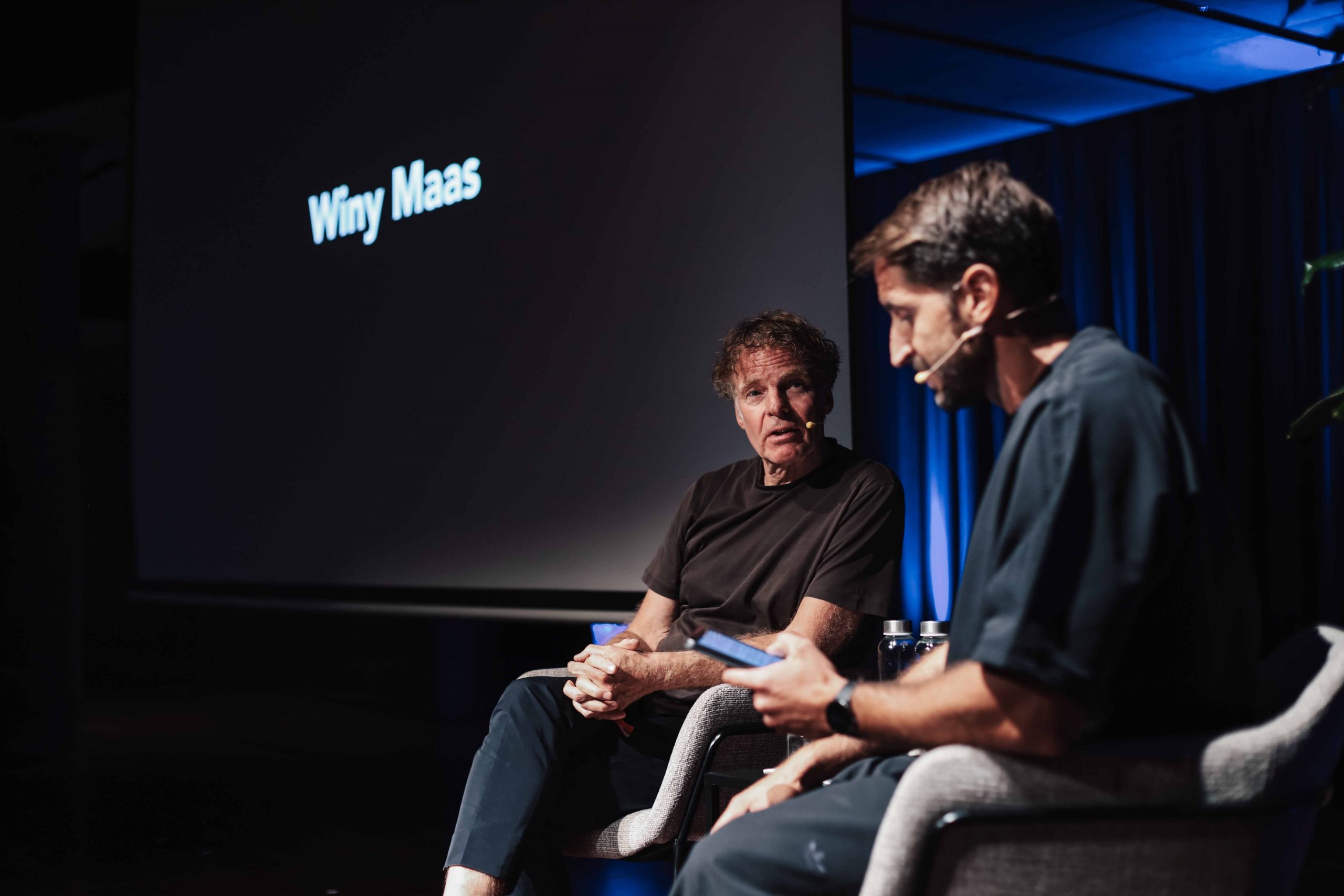
– Winy Maas, MVRDV, Rotterdam – www.mvrdv.nl
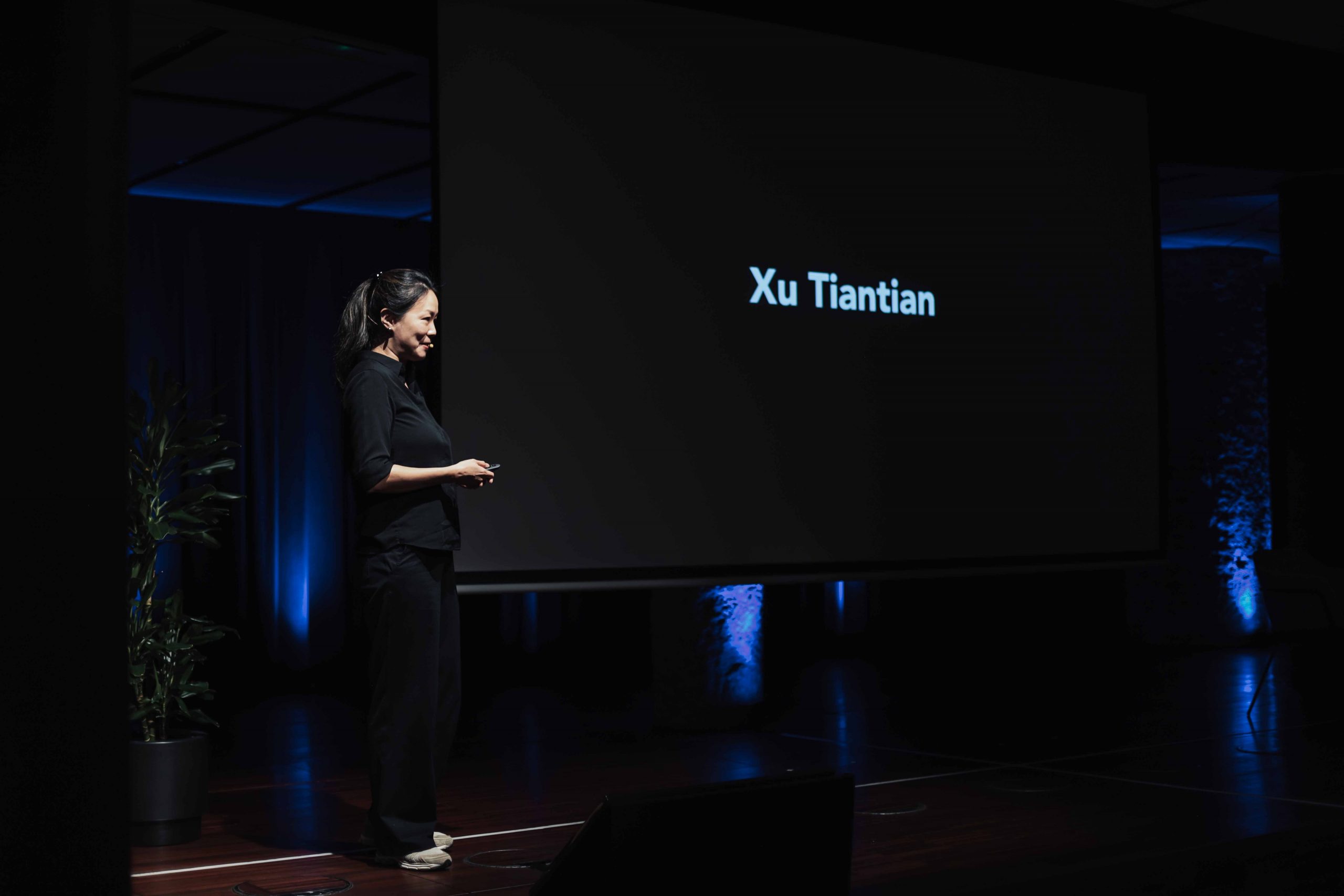
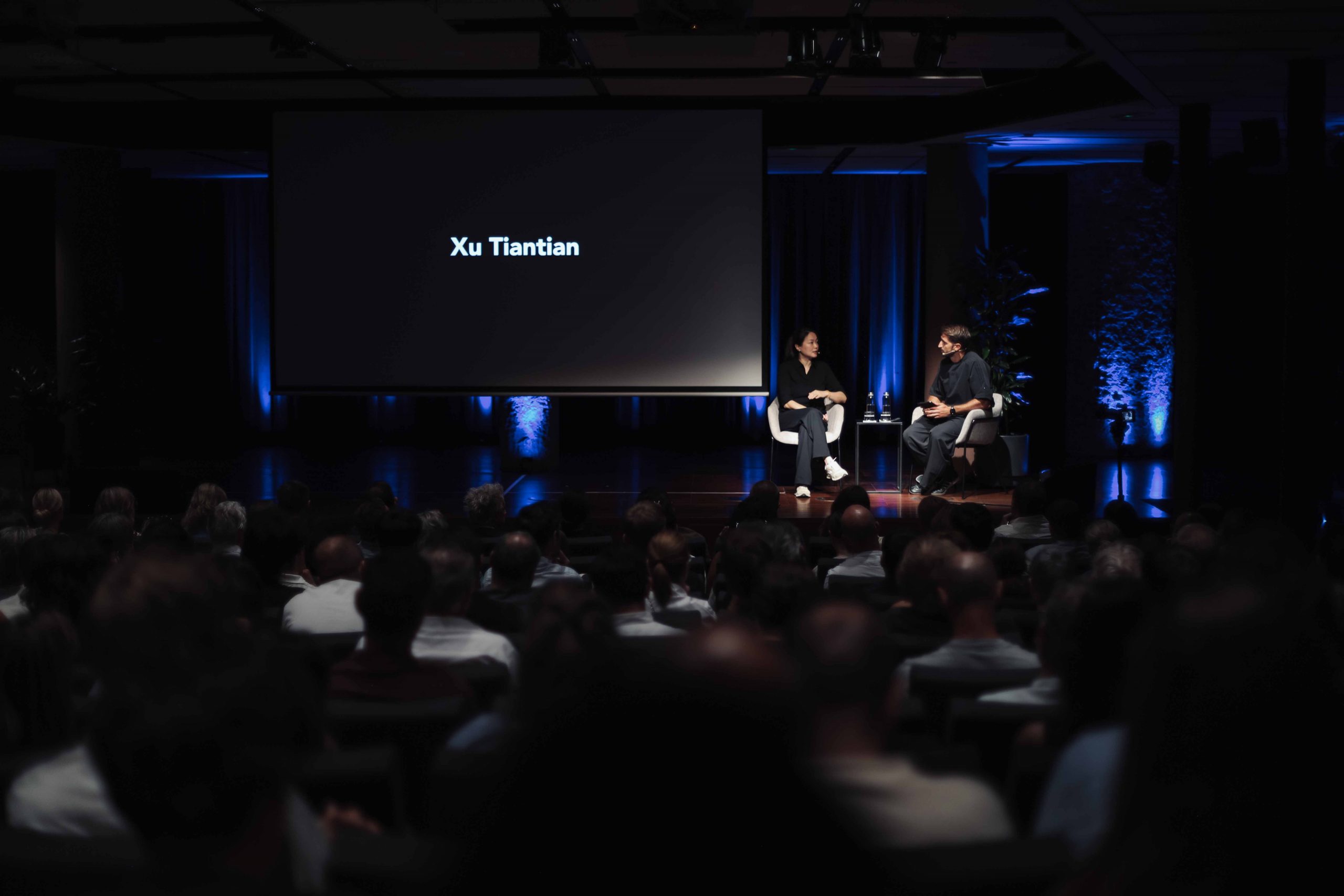
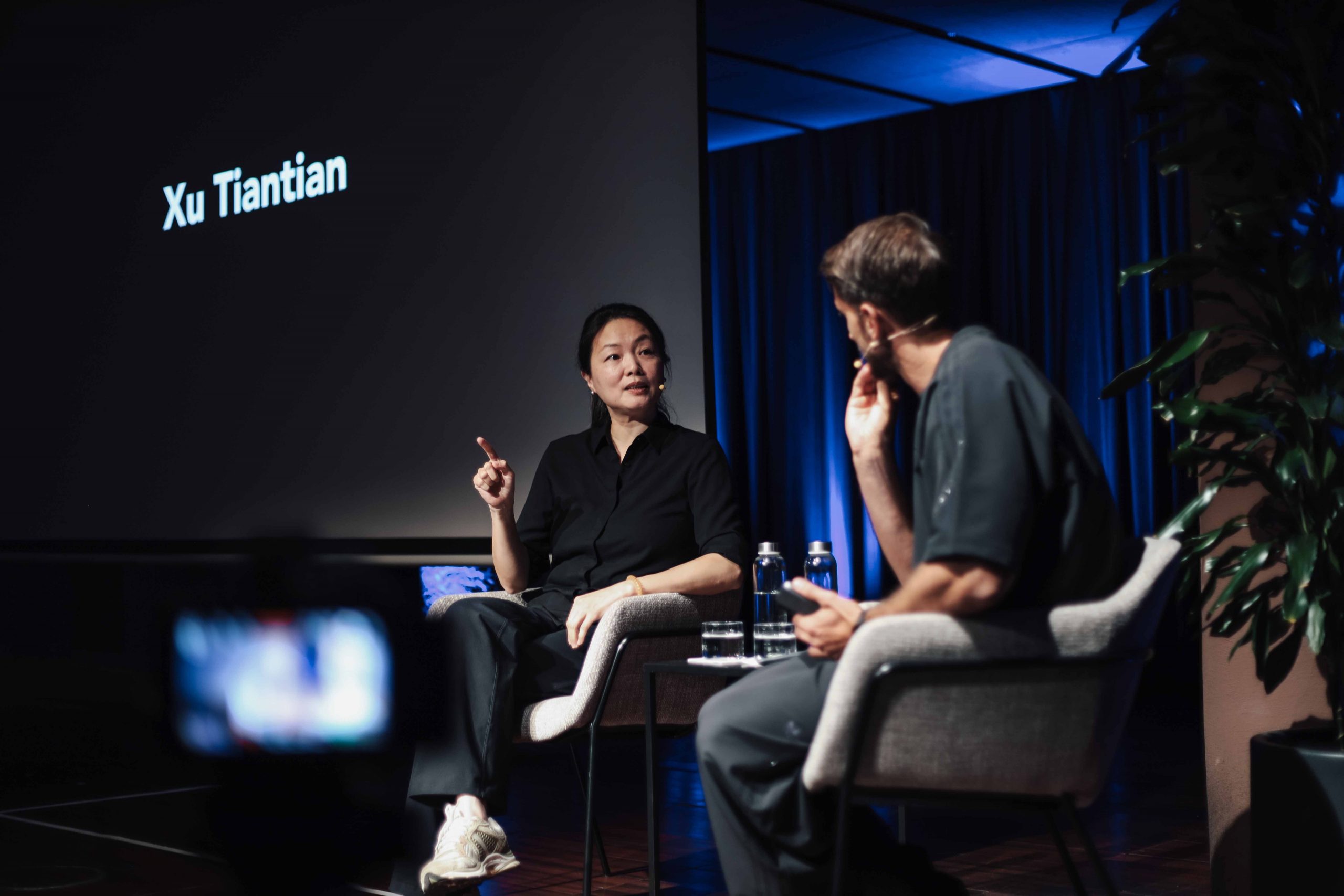
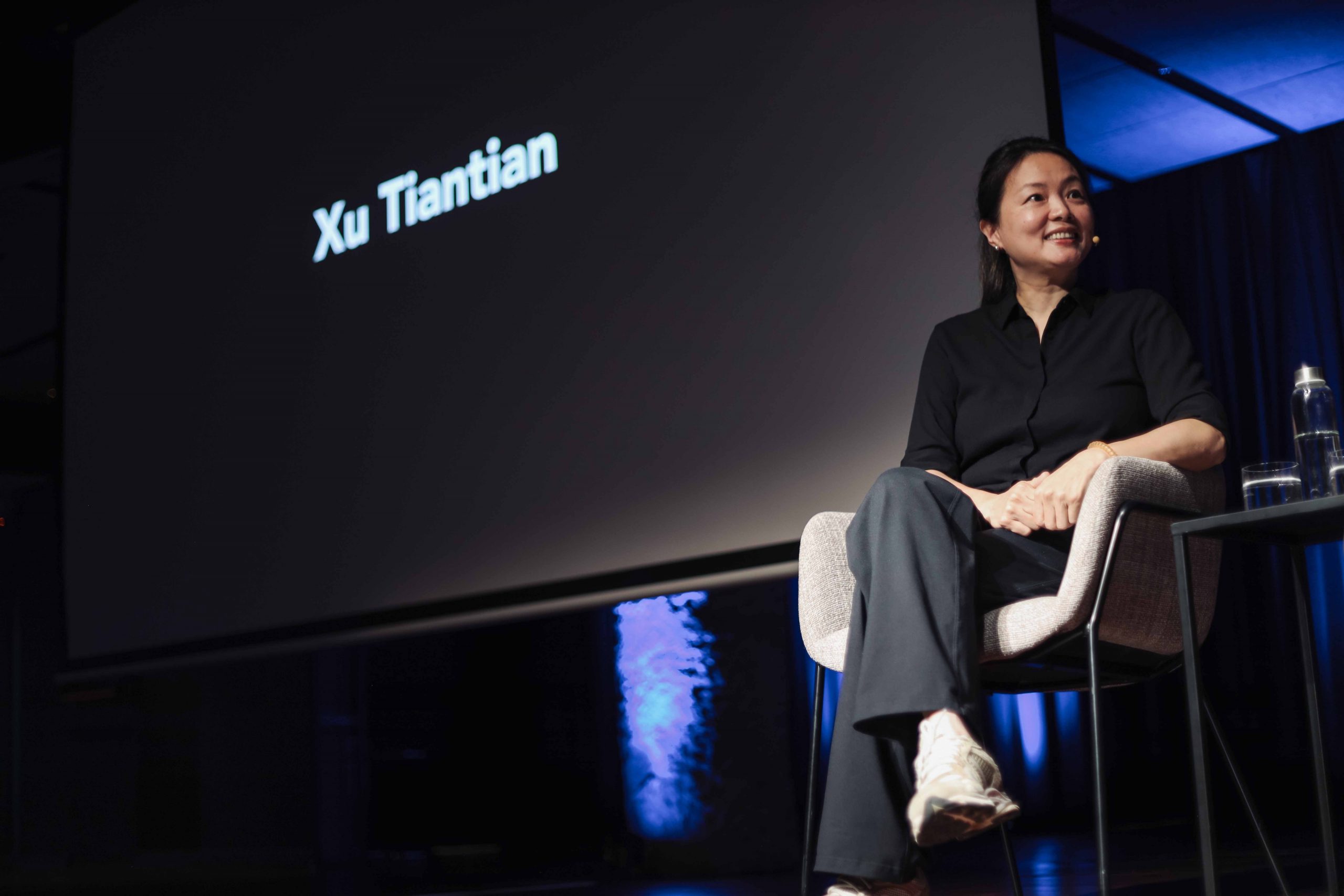
– Xu Tiantian, DnA_Design and Architecture, Beijing – www.designandarchitecture.net
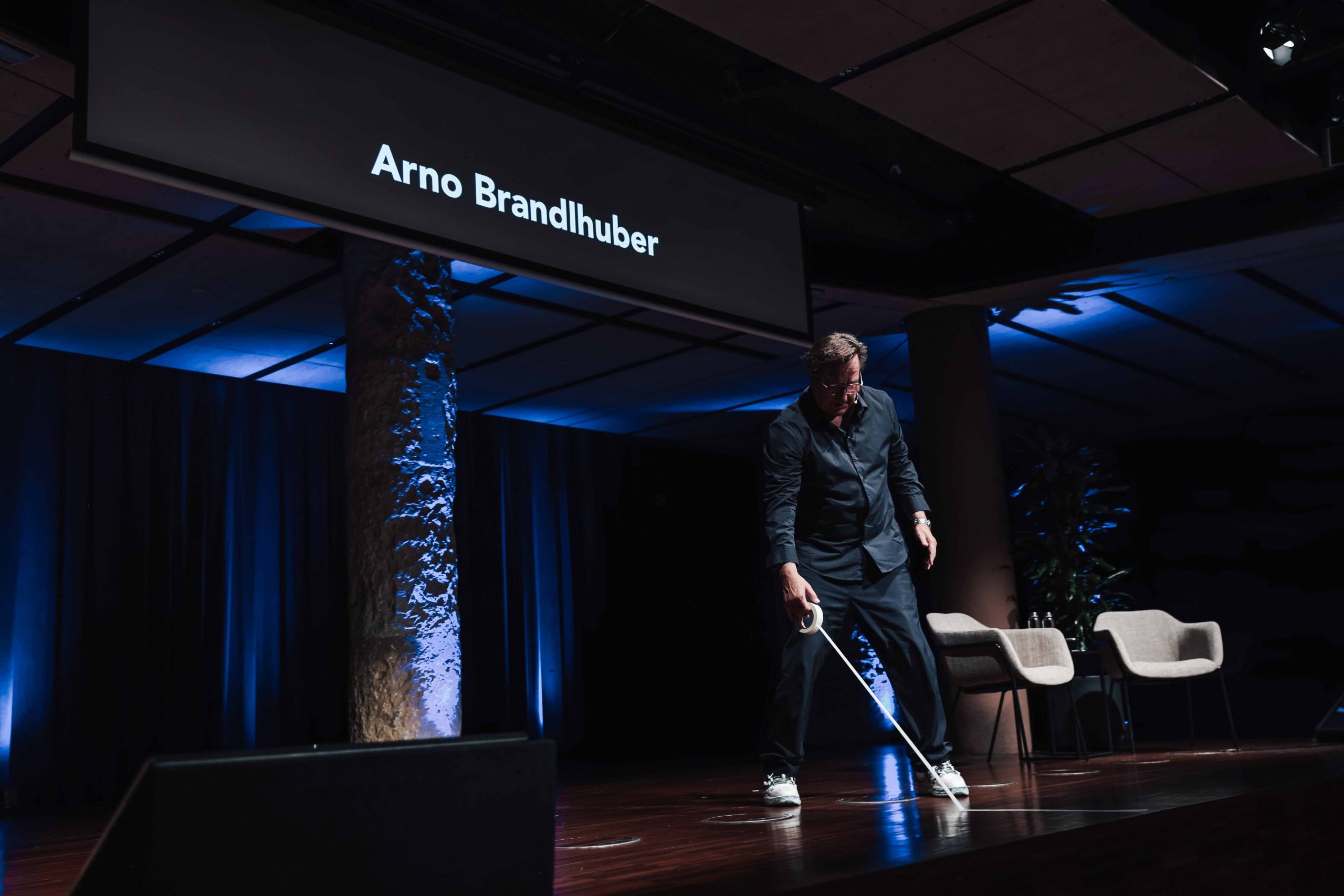
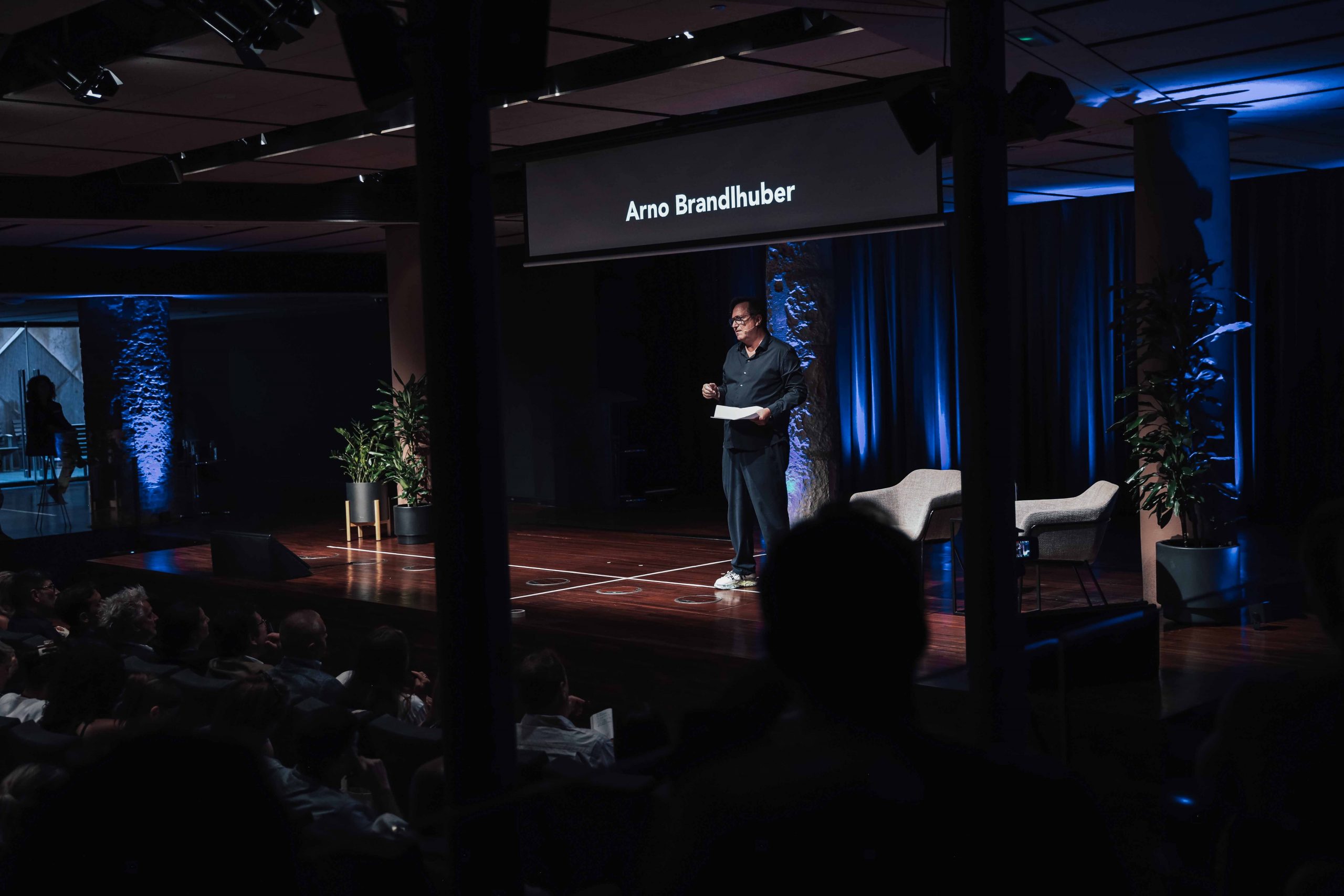
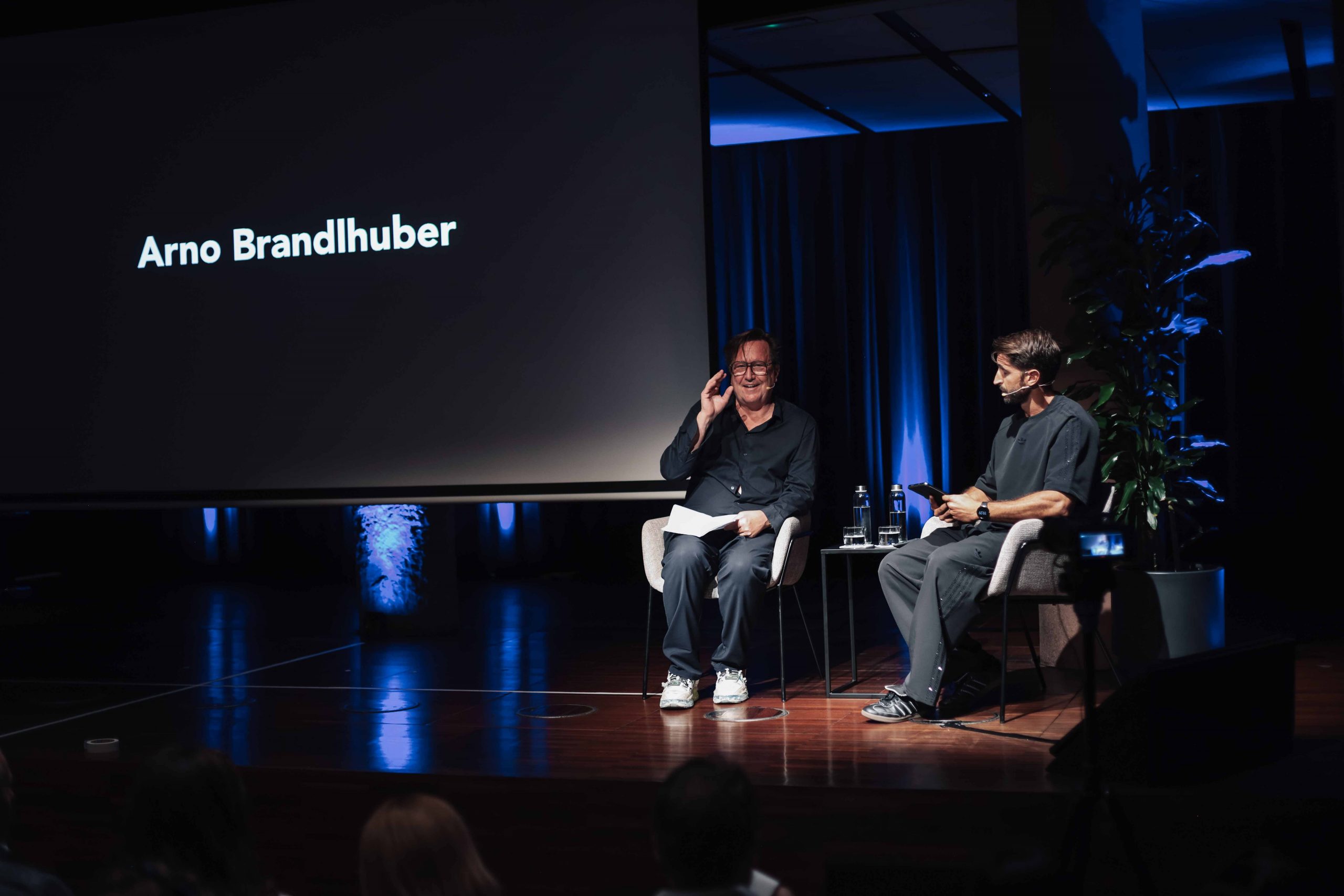
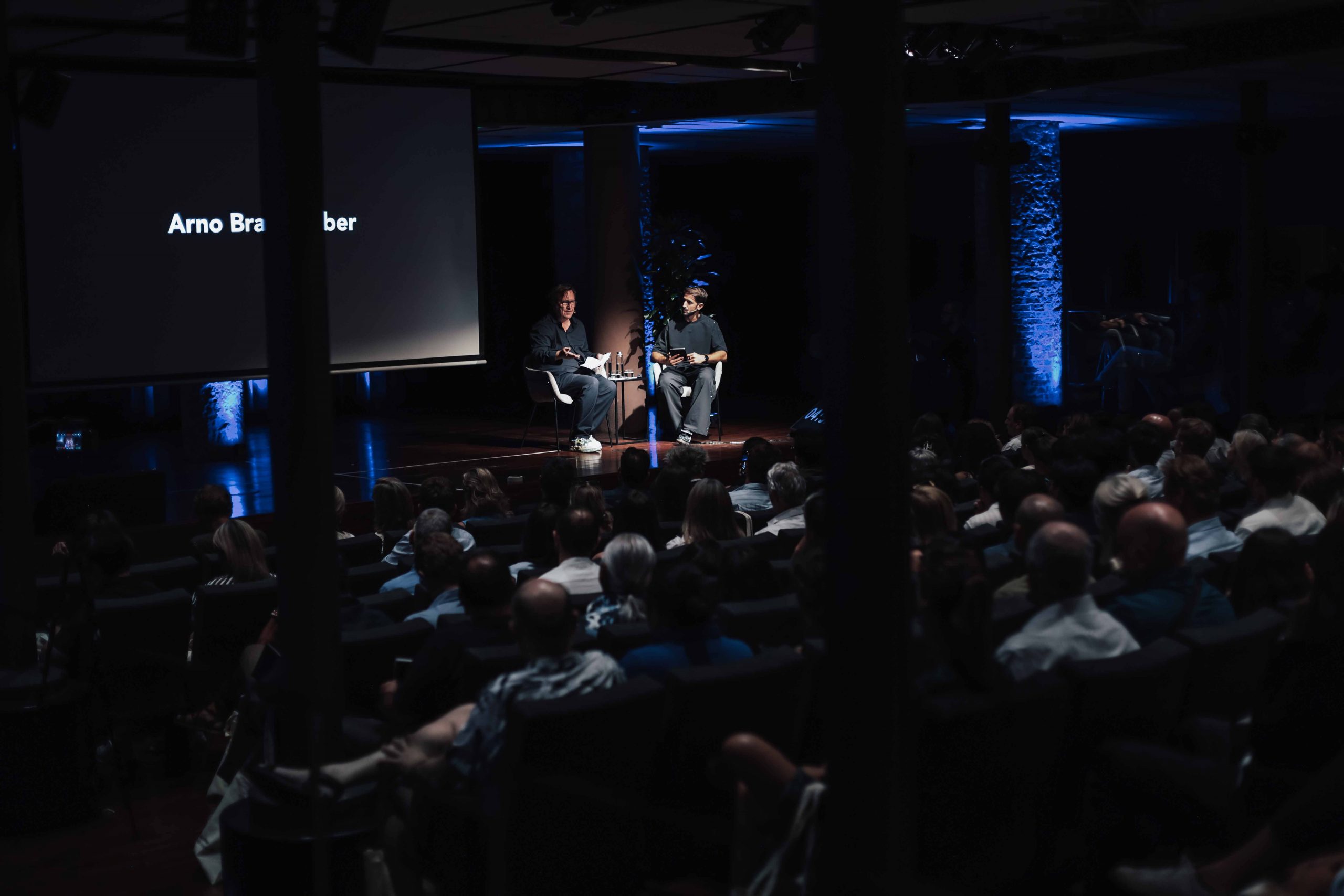
– Arno Brandlhuber, bplus.xyz (b+) and HouseEurope!, Berlin – www.bplus.xyz
Doors open at 6:00 pm. Talks commence at 6:30 pm. The talks will be held in English.
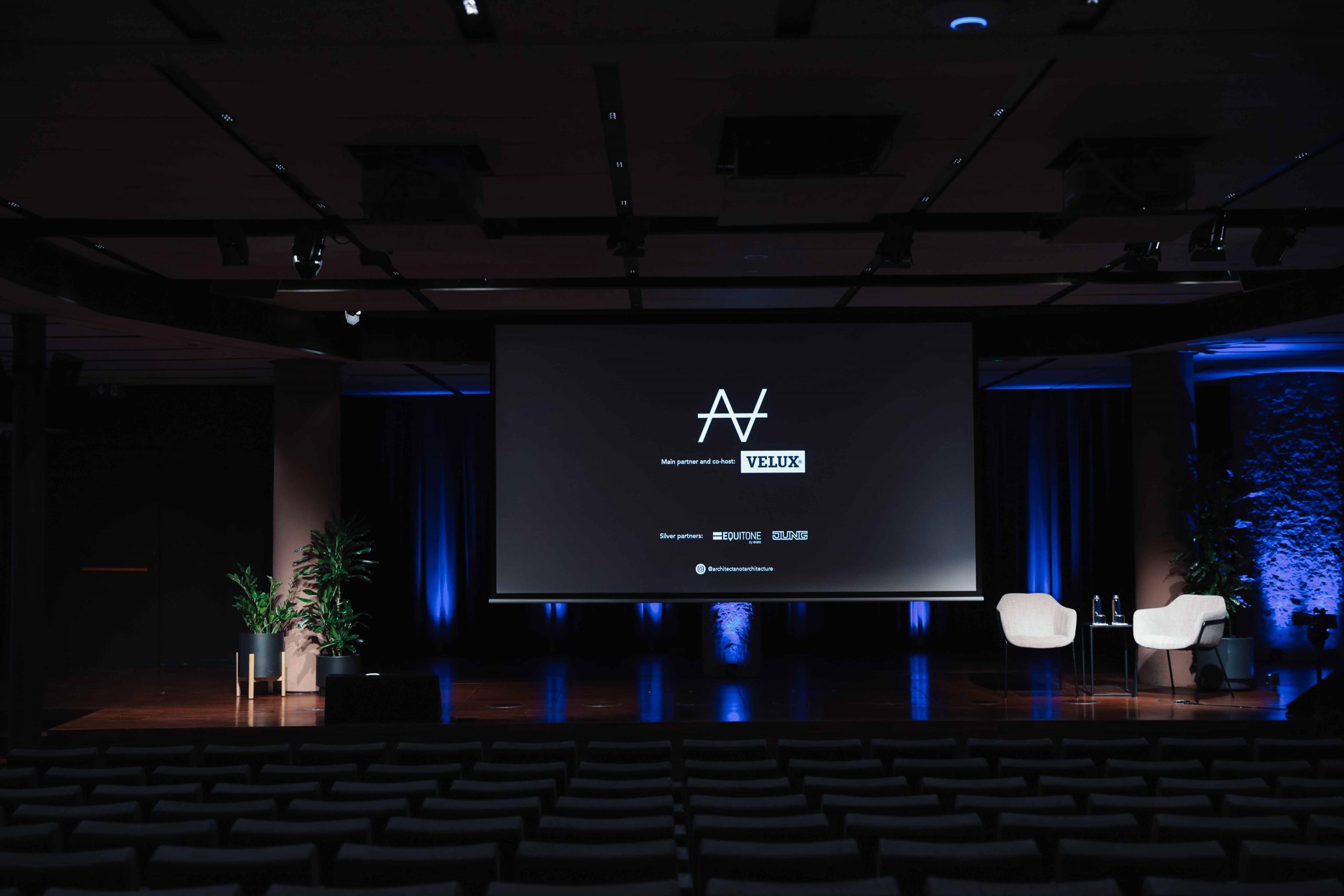
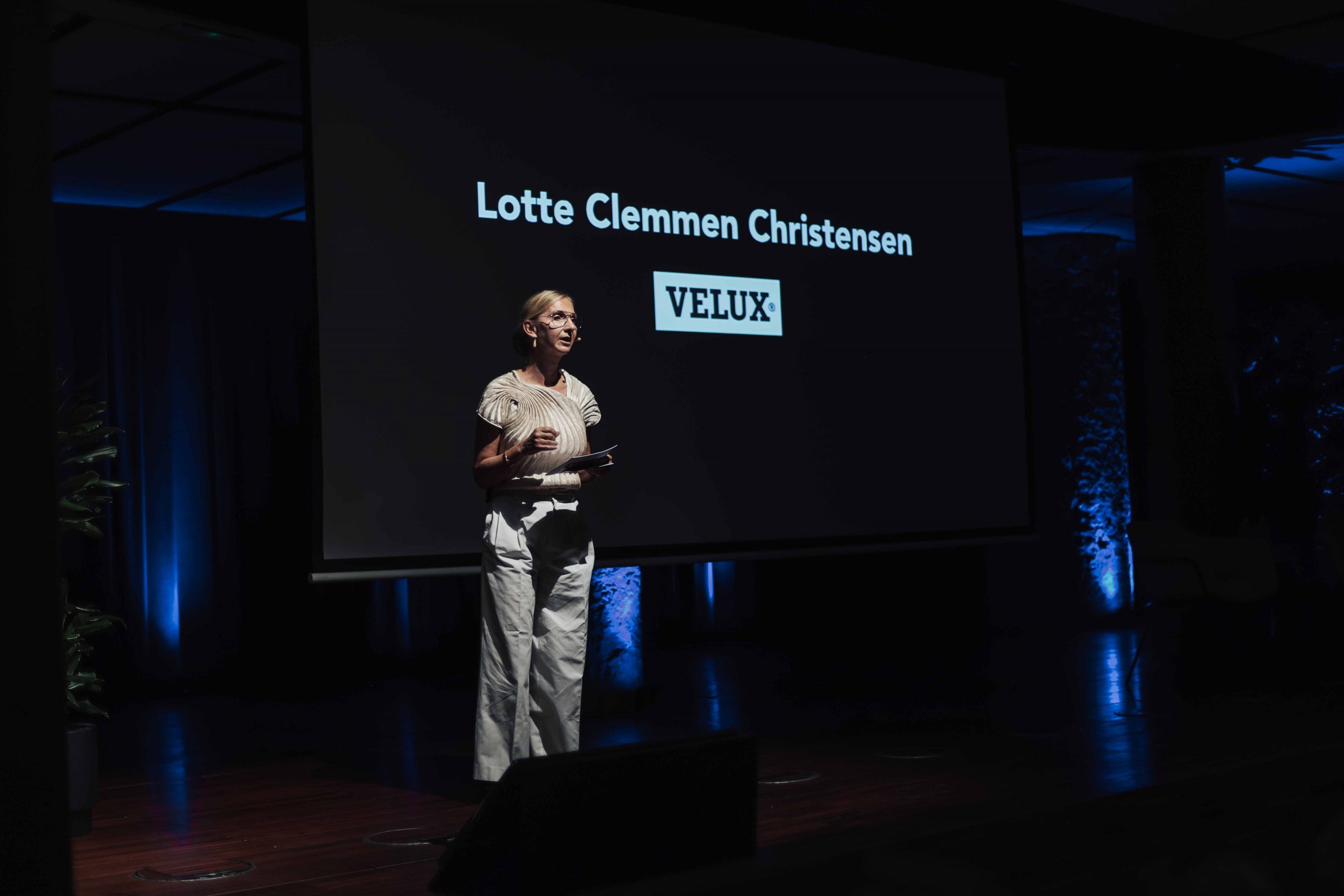
This event is co-presented with our Main Partner and Co-Host VELUX, and kindly supported by our partners JUNG and EQUITONE.
Tickets
Program live
18:00
“Doors open” & Get-Together
18:30 – 18:45
Welcome
18:15-20:30
Speakers (20-minute talk & 10-minute interview)
20:30 – 21:00
Round table discussion & Q&A
21:00 – 22:30
Get-Together & Fingerfood
Let’s explore circular building together
The challenge of our generation is to build with a lighter impact. Knowing that the building industry is key to tackling climate change, we as a façade material producer want to do more than just transform our materials. By 2030, we want to forge new and innovative partnerships, trailblaze transparency across the value chain and establish a sustainability council of external experts to stay on track to full circularity.
JUNG Architecture Talk Podcasts
The first podcast of the JUNG Architecture Talks series in spring 2020 was followed by 145 fascinating conversations with national and international architectural firms – about the profession and vocation, strategies and the will to change the world.
Even though architecture usually lives through the power of images, over 5,000 minutes of conversation prove how words can inspire architecture.
The event venue
You are currently viewing a placeholder content from YouTube. To access the actual content, click the button below. Please note that doing so will share data with third-party providers.
More InformationConsidered Gaudí’s most emblematic civil work, La Pedrera – Casa Milà was built between 1906 and 1912 as a radical departure from everything architecture had been. Its self-supporting stone façade, free-plan floors, and underground garage were structural innovations that would not become common practice for another two decades. Declared a UNESCO World Heritage Site in 1984, appreciation for the building evolved over time, from controversial and widely mocked to universally admired.
La Pedrera Auditorium occupies the heart of the building, conceived as a dedicated cultural space within its ongoing life as a living institution. Housed beneath the iconic roofline, it is surrounded by the same undulating stone and ironwork that has defined Barcelona’s skyline for over a century. Its interior balances acoustic functionality with the building’s organic language: curved surfaces, natural materials, and the sense that no line was ever meant to be straight.
About the Speakers
Winy Maas is a Founding Partner, Urban Planner and Landscape Architect of MVRDV, the internationally acclaimed Rotterdam-based practice he co-founded with Jacob van Rijs and Nathalie de Vries in 1993. Driven by a commitment to green, user-defined, and sustainable urbanism, MVRDV has earned global recognition for its innovative, experimental approach merging theory with practice across architecture, urban design, and landscape. Among the firm’s most celebrated projects are the Dutch Pavilion at Expo 2000 in Hannover, the Markthal in Rotterdam (2014), Crystal Houses in Amsterdam (2016), the Tianjin Binhai Library (2017), Valley in Amsterdam (2022), and Depot Boijmans Van Beuningen (2021) – the first publicly accessible art depot in the world. Maas is also Professor of Urbanism and Architecture at Delft University of Technology, where he founded The Why Factory in 2008, a research institute dedicated to the cities of the future. In 2015, he was appointed to the Order of the Dutch Lion by the Dutch government, and in 2011 received the Chevalier de la Légion d’honneur from France. www.mvrdv.nl
Xu Tiantian is the Founder and Principal Architect of DnA_Design and Architecture, an interdisciplinary practice established in Beijing in 2004. She studied architecture at Tsinghua University and received her Master of Architecture in Urban Design from Harvard University’s Graduate School of Design, where she is currently also a professor at the School of Architecture. Her practice is internationally recognised for its pioneering approach to rural revitalisation through what she describes as “architectural acupuncture” – small-scale, site-specific interventions designed to activate local culture, agriculture, and tourism. DnA has built over 20 public structures in China’s mountainous Songyang County, a project recognised by UN-Habitat in 2019 as a global model for urban-rural integration. Her recent accolades include the Swiss Architectural Award (2022), the Berlin Art Prize (2023), the Marcus Prize for Architecture (2023), the Holcim Gold Award for Asia-Pacific (2023), the UNESCO Global Award for Sustainable Architecture, and the Wolf Prize in Architecture (2025). www.designandarchitecture.net
Arno Brandlhuber is an architect and urban planner based in Berlin, and Professor of Architecture and Design at ETH Zurich. After founding his first practice in Cologne in 1992, he established brandlhuber+ in 2006 as a collaborative architectural practice dedicated to working across disciplines, offices, and individuals. His work – including Brunnenstrasse 9 (Berlin, 2009), the Antivilla (Krampnitz, 2014), and the conversion of the Brutalist St. Agnes church into an art space (Berlin, 2015) – has earned international recognition for its radical approach to architectural reuse and transformation. Beyond building, Brandlhuber uses publications, exhibitions, and film to create a dialogue between practice and theory, with a particular interest in legislation as a driver of the built environment. His work has been exhibited at the Venice Architecture Biennale in 2004, 2006, 2008, 2012, and 2016. In 2023, Brandlhuber co-founded HouseEurope! with Olaf Grawert, a non-profit that brings together industry expertise with policy advocacy. Evolving from a European Citizens’ Initiative with over 80,000 supporters and 250 partners, HouseEurope! embodies his conviction that systemic change in the built environment requires both architectural innovation and legislative transformation. www.bplus.xyz and www.houseeurope.org/